Landscape with Herdsmen and Cattle near a Tomb — History & Facts
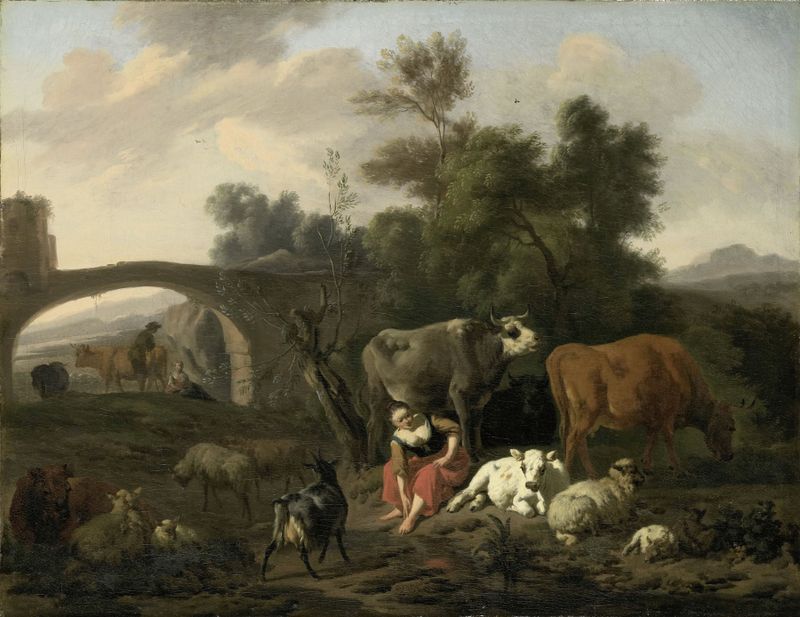
In the delicate interplay of light, this artwork speaks volumes about the human condition, intertwining serenity and struggle. Look to the foreground, where the herdsmen stand resolutely beside their cattle, bathed in a gentle golden hue. The soft, warm light cascades down from an unseen sun, illuminating the figures while casting faint shadows that hint at the complexities of their lives. The tomb, a solemn monument in the background, anchors the scene, its presence a stark reminder of mortality amid pastoral life. Delve deeper into the contrasts within the composition.
The lush greenery juxtaposed with the stark gravestone evokes a tension between life and death, prosperity and loss. Each brushstroke captures the herdsmen’s connection to the land, yet their posture suggests an underlying weariness, as though they are guardians of an ancient secret intertwined with the earth beneath their feet. The light, with its golden embrace, both softens and sharpens the narrative, inviting viewers to reflect on the dualities of existence. Painted between 1660 and 1690, the artist created this piece during a period marked by shifting artistic trends and growing interest in realism.
Working in the Netherlands, he was influenced by the golden age of Dutch painting, where the depiction of everyday life flourished. The interplay of light and shadow in this landscape reflects a broader exploration of the human experience, capturing a moment that resonates with both beauty and poignancy.