Landscape with Herdsmen and their Droves — History & Facts
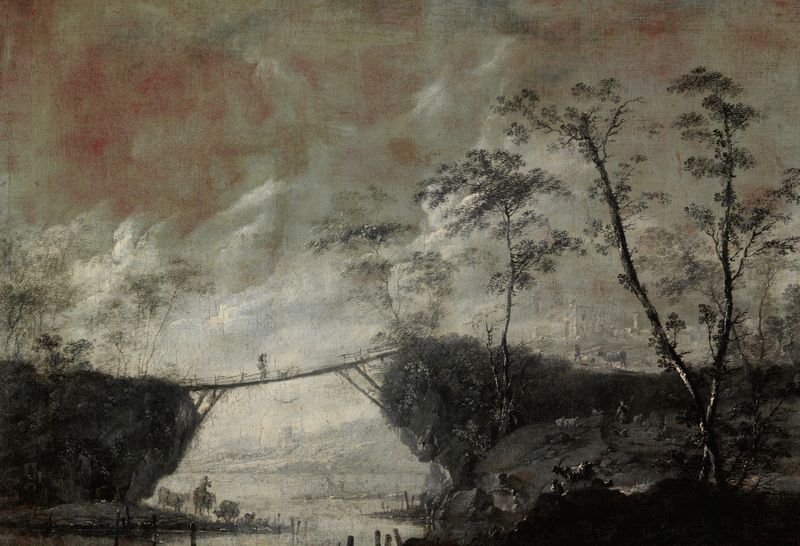
What secret hides in the quiet of the canvas? In the serene expanse of nature, a world unfolds, revealing the beauty of simplicity and the whispers of a timeless existence. Look to the foreground where herdsmen stand, their forms etched against the verdant backdrop. Notice the warm earth tones that cradle the scene, hinting at both the tranquility of rural life and the diligent labor of the figures. The gentle strokes of the brush breathe life into the cattle, their soft contours mirroring the rolling hills behind them.
Observe how the light filters through the clouds, casting a divine glow over this pastoral setting, enriching the greens and browns, while inviting the viewer closer to the heart of this landscape. Yet beneath this peaceful facade lies a poignant reminder of humanity's relationship with nature. The herdsmen, though steadfast and present, seem almost spectral against the vastness, suggesting the transient nature of life. The juxtaposition of their labor and the wild beauty surrounding them evokes a reverence for the land—a deep awe that transcends the canvas.
The stillness of the scene contrasts with the inherent chaos of existence, leaving the viewer to ponder the delicate balance between man and nature. In 1648, Cornelis de Bie painted this work during a time of burgeoning artistic exploration in the Netherlands. As the Baroque movement flourished, he found himself influenced by the techniques of contemporary masters while seeking to articulate his own vision of rural serenity. The painting reflects both his personal journey and the broader cultural shift towards appreciating the idyllic beauty of everyday life, encapsulating a moment that resonates with eternal truths.