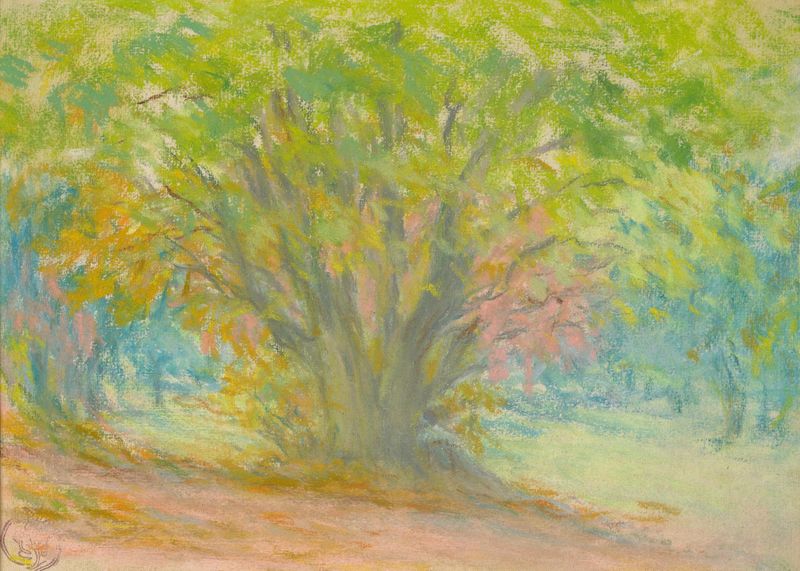
Landscape with Pond — History & Facts
When did color learn to lie? In those vivid strokes of blue, green, and amber, the landscape whispers truths that pulse beneath the surface, beckoning the viewer to delve deeper. The essence of creation resonates within, a reminder that nature is both a reflection and a fabrication of our perceptions. Look to the left at the tranquil pond, a mirror reflecting the chaos of the sky above. Notice how the light dances upon the water, creating rippling echoes of color that vibrate with life.
The brushwork is both free and controlled, revealing the artist's dexterity with blending and layering hues. The contrasting tones of the foliage frame the scene, guiding the eye towards the serene focal point of the pond, where reality and imagination entwine. Within this idyllic composition lies a tension between tranquility and turmoil. The gentle asymmetry of the trees suggests a hidden disarray as they lean towards the water, while the vibrant colors pulse with an emotional intensity that stirs the viewer's heart.
This interplay of shadow and light evokes a sense of fleeting beauty, hinting at the transient nature of existence itself, as if each moment captured is a breath held in anticipation. Émile Schuffenecker painted this work around 1896 while living in France, during a period marked by innovation and experimentation in the art world. He was influenced by the Post-Impressionist movement and sought to explore color's emotional capacity. At this time, he was also closely associated with artists like Vincent van Gogh and Paul Gauguin, immersing himself in a world that valued personal expression over strict representation.