
Landscape with Saint Benedict — History & Facts
What if beauty was never meant to be finished? In the serene expanse of a 17th-century landscape, a yearning for an eternal moment hangs in the air, echoing through every brushstroke. Look to the left at the imposing figure of Saint Benedict, cloaked in rich hues of deep brown and muted gold. His presence anchors the scene, framed by a verdant landscape that stretches infinitely toward the horizon. Notice how the gentle play of light and shadow dances across the rolling hills, creating a dynamic contrast between the tranquil setting and the saint’s solemnity.
The delicate blending of greens and earthy tones invites the viewer to linger, suggesting a world both lush and untouched. As you explore the painting further, subtle details emerge: the small stream that cuts through the foreground, symbolizing the flow of time and faith; the distant mountains, shrouded in mist, embodying the unknown journey of spirituality. Each element contributes to a deeper emotional tension—between the fleeting beauty of nature and the enduring quest for divine connection. The overall composition reflects a moment of introspection, urging us to recognize the intimacy of solitude amid the vastness of creation. Created during a period of introspective artistry in the 17th century, the artist captured a blend of spirituality and nature at a time when the Baroque movement was flourishing.
Working in the Dutch region, he responded to the growing interest in landscapes that conveyed moral and spiritual lessons. This piece reflects the artist's attempt to reconcile the natural world with the divine, a theme that resonated deeply with audiences of his time.
More Artworks by Lucas Achtschellinck
Browse all →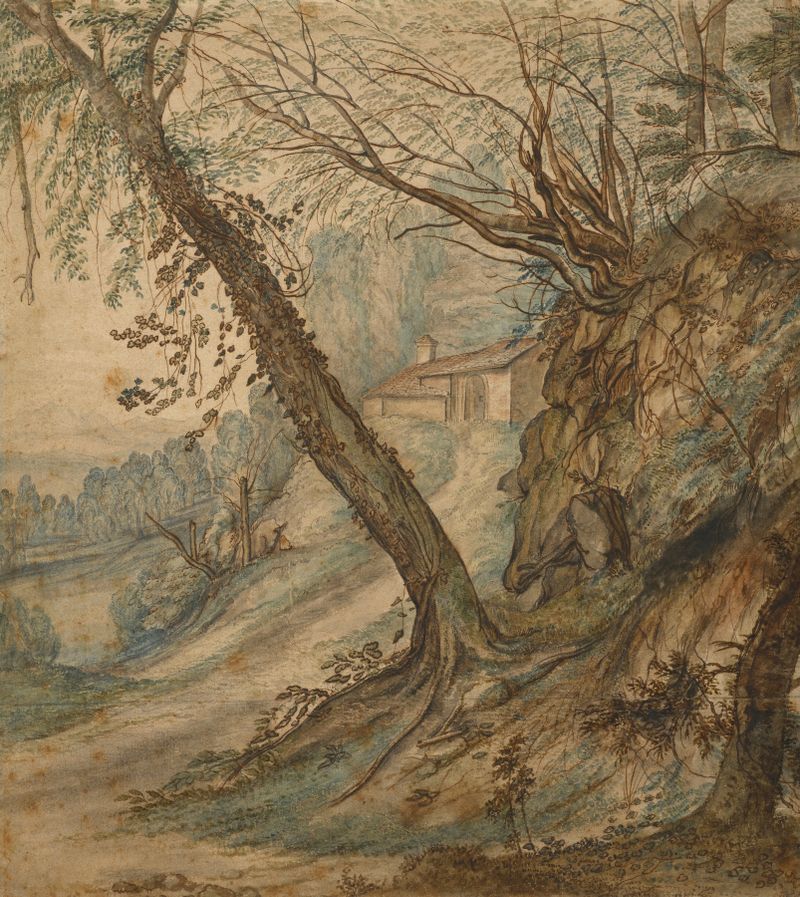
More Religious Art
Browse all →
The Return of the Prodigal Son
Rembrandt van Rijn

The Garden of Earthly Delights
El Bosco

Count Orgaz’ funeral
El Greco

The Hundred Guilder Print: the central piece with Christ preaching, the plate arched
Rembrandt van Rijn

The Descent from the Cross
Rogier van der Weyden

The return of the prodigal son
Rembrandt van Rijn