A Wooded Landscape with a Path to a House — History & Facts
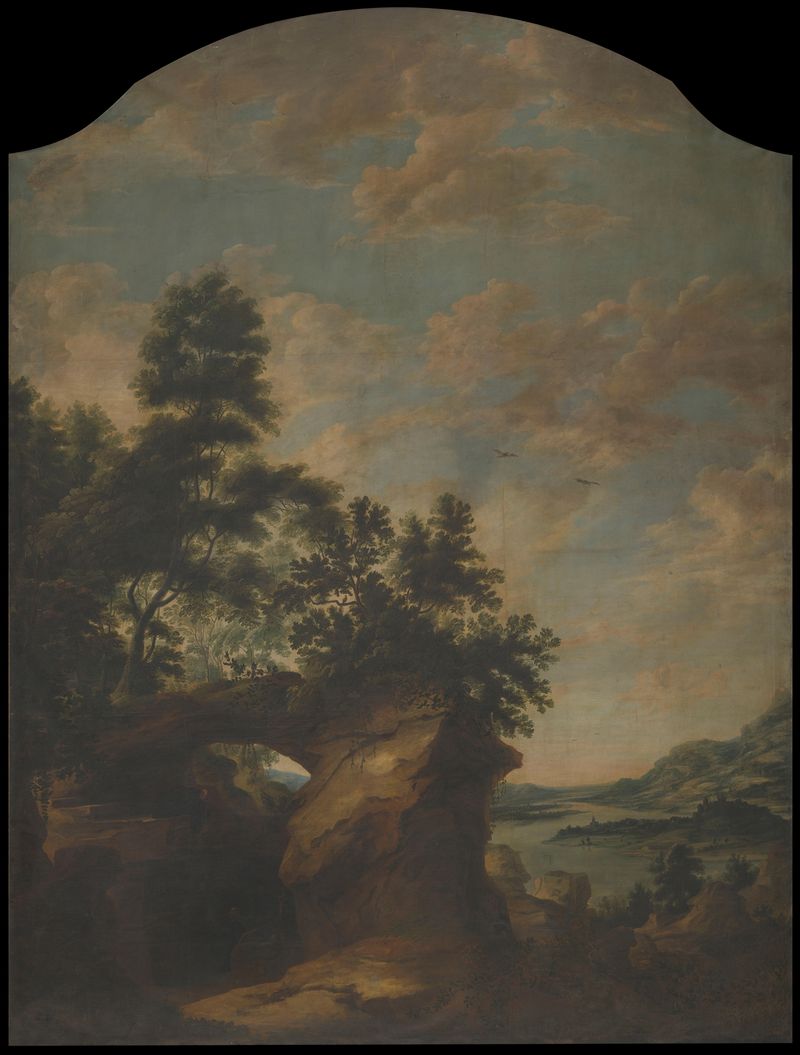
Where does light end, and longing begin? In the serene embrace of nature, the boundaries of life and death blur, inviting contemplation on our fleeting existence. Look to the left at the lush greenery, where trees arch gracefully, their leaves rendered with delicate brushstrokes that evoke a sense of tranquility. The path, winding gently through the landscape, draws the eye toward a distant house, its warm tones standing in stark contrast to the cool greens surrounding it. Notice how the light filters through the foliage, dappling the ground and adding texture to the scene.
The careful composition balances open space with inviting warmth, creating a dialogue between the wilderness and the presence of human life. Yet within this idyllic setting, an undercurrent of melancholy stirs. The inviting path leads to a house that remains just out of reach, hinting at the transience of life and the choices that define our journeys. The interplay of light and shadow suggests the passage of time, evoking a sense of nostalgia that lingers beyond the canvas.
These elements serve as a poignant reminder of mortality, urging viewers to reflect on the journey itself, rather than simply the destination. Created between 1640 and 1650, this work emerged during a period of immense change in the Netherlands, both politically and artistically. Achtschellinck, influenced by the rise of landscape painting in Dutch art, sought to capture not just the beauty of nature, but the emotional resonance it holds. The work reflects a society deeply engaged with introspection and the contemplation of life's impermanence amidst the tranquil beauty of the natural world.