Landscape with Sheep — History & Facts
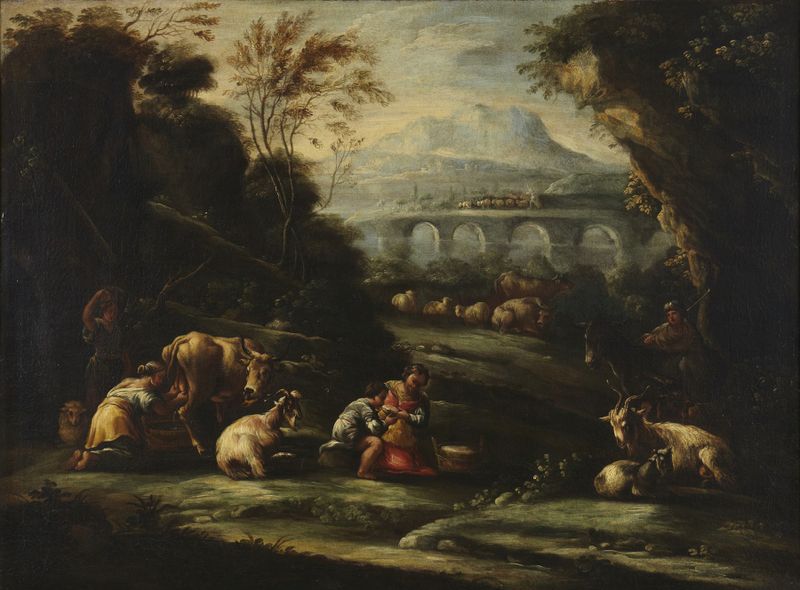
Is this a mirror — or a memory? The canvas invites us into a tranquil world where pastoral beauty blurs the line between dream and reality. Look to the right at the gentle slope leading down to a shimmering pond, where soft ripples distort the reflection of a solitary tree. Notice how the light falls upon the sheep, their wooly forms illuminated by the warm glow of the late afternoon sun, creating an almost ethereal quality. The lush greens and earthy browns of the landscape harmonize with hints of vibrant color, evoking both serenity and the fleeting nature of this idyllic moment. Yet beneath the surface, a tension simmers.
The sheep, while seemingly content, are mere specters in this idyllic tableau, suggesting the fragility of pastoral life. The tranquil waters may conceal deeper currents of emotion, a reminder that beauty often exists alongside impermanence. Each brushstroke reinforces the illusion of a perfect moment, yet hints at the underlying reality that such scenes are ephemeral, often lost to time. Philipp Peter Roos created Landscape with Sheep during the late 17th to early 18th century, a time when the Baroque movement was flourishing in Europe.
Roos, known for his naturalistic landscapes, was navigating the transition from the dramatic styles of earlier artists to a more serene and contemplative approach. At this period, the world of art was shifting, with a growing appreciation for the beauty of the everyday, reflecting broader changes in society and the desire for tranquility amid the tumult of the times.