Landscape with Sheep, Picardy — History & Facts
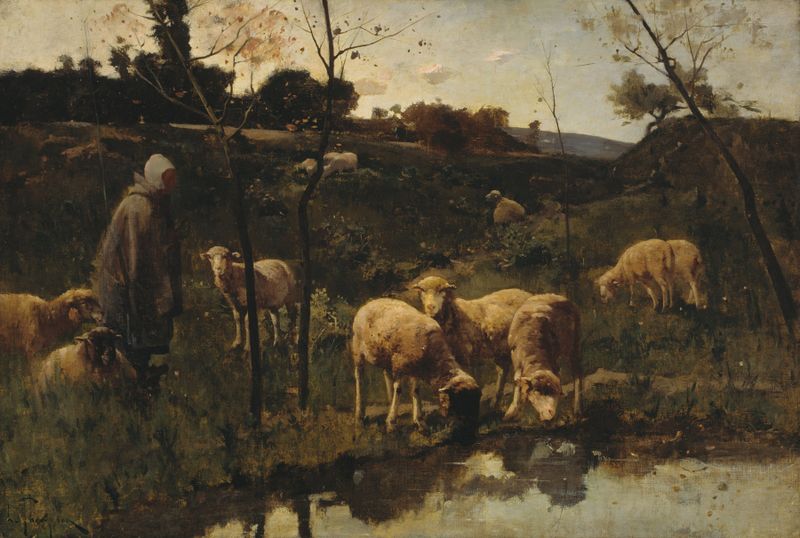
Is this a mirror — or a memory? In a world where landscapes shift like the tides of time, the echoes of nostalgia whisper through the fields, inviting us to reflect on what has been lost. Look to the horizon, where a gentle light envelops the rolling hills of Picardy, casting an ethereal glow over the sheep grazing peacefully below. The soft pastels of greens and browns blend seamlessly, evoking a serene yet melancholic atmosphere. Notice how the brushstrokes seem to dance, a testament to the artist's skill, creating texture in the clouds and the earth, as though nature itself breathes through the canvas.
The composition leads the eye across the landscape, capturing both the tranquility of rural life and the fleeting nature of existence. Delve deeper into the scene, and you'll find subtle contrasts between the pastoral serenity and an underlying sense of transience. The sheep, symbols of innocence and simplicity, stand as sentinels of a lost pastoral past, evoking feelings of yearning for simpler times. The horizon, while vast and open, seems to stretch infinitely, suggesting the passage of time and the inevitable changes that come with it.
Each element in the painting plays a role in narrating the story of loss — of the land, of the past, and perhaps even of the artist's own memories. Harry Thompson painted this piece in the late 19th century during a time of rapid industrial change across Europe. Living in a period marked by urbanization and technological advancements, he sought to capture the idyllic beauty of rural landscapes before they became mere footnotes in history. This work reflects not only his artistic vision but also the collective nostalgia of a society on the brink of transformation, cherishing moments that would soon fade into memory.