Landscape with stream — History & Facts
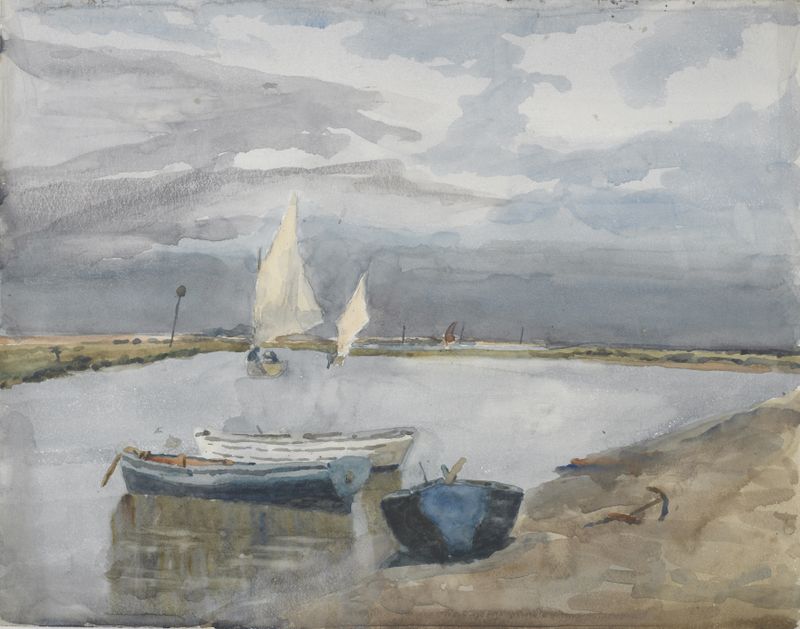
What secret hides in the quiet of the canvas? In a world brimming with noise, the stillness of a landscape can whisper the deepest truths of solitude. Look to the left at the gently flowing stream, its surface reflecting the muted hues of the surrounding foliage. The brushstrokes are soft yet assertive, a careful balance that draws the eye into the tranquil depths of the scene. Notice how the dappled light breaks through the trees overhead, casting patches of warmth amidst the cool greens and browns.
This interplay of light and shadow serves to create a sense of intimacy, inviting contemplation on the nature of the serene yet lonely space. As you absorb the details, consider the subtle emotional tensions woven throughout. The flowing water suggests movement, yet the stillness of the trees stands in stark contrast, creating a palpable sense of isolation. There is an absence of figures, a deliberate choice that places the viewer in a solitary position, reinforcing feelings of introspection and longing.
The landscape seems alive, yet it is devoid of human presence, prompting reflections on one’s own connection to nature and the solitude that often accompanies it. Mark Fisher created this piece during a time of artistic exploration, though the exact date remains unknown. It is believed that he painted such works while navigating his own personal struggles, seeking solace in the natural world. This painting reflects an era when artists began to break away from traditional styles, delving into emotional depth and the human experience, marking a pivotal shift in the landscape genre.