
Landscape with the Martyrdom of Saint Sebastian — History & Facts
A sun-drenched clearing unfolds, where the divine and the mortal collide in a moment of brutal vulnerability. Saint Sebastian, bound to a gnarled tree, faces the heavens with an expression caught between despair and hope. Arrows pierce his body, glinting in the golden light, while a distant crowd watches, their faces a mix of awe and horror, frozen in the tension of witnessing a sacred sacrifice. Look to the left, where the lush greens of the forest frame the scene, contrasting sharply with the deep reds and browns of Sebastian’s wounds.
Notice how the artist skillfully uses chiaroscuro to highlight the saint’s figure against the background, drawing your eye to his anguished form. The vibrant colors pulse with life, yet the serenity of the landscape feels eerily detached from the violence occurring within it, encapsulating the dual nature of beauty and suffering. At first glance, the martyrdom may seem solely about pain, but upon closer inspection, one uncovers layers of desire and salvation. The surrounding crowd, though passive, symbolizes the eternal struggle between faith and doubt, while the gentle breeze rustles the leaves, whispering of divine intervention.
Each arrow represents not just suffering, but also the unyielding spirit of love and hope that transcends pain, reminding us of the complexities of devotion. In 1894, Albert Welti painted this compelling work during a time when Europe was grappling with questions of faith and identity amidst rapid industrialization. Living in Switzerland, he was influenced by Symbolism and aimed to convey profound emotional truths through his art. This piece reflects not only his personal exploration of spirituality but also the broader cultural dialogues of his time, positioning him within the transitional landscape of late 19th-century art.
More Artworks by Albert Welti
Browse all →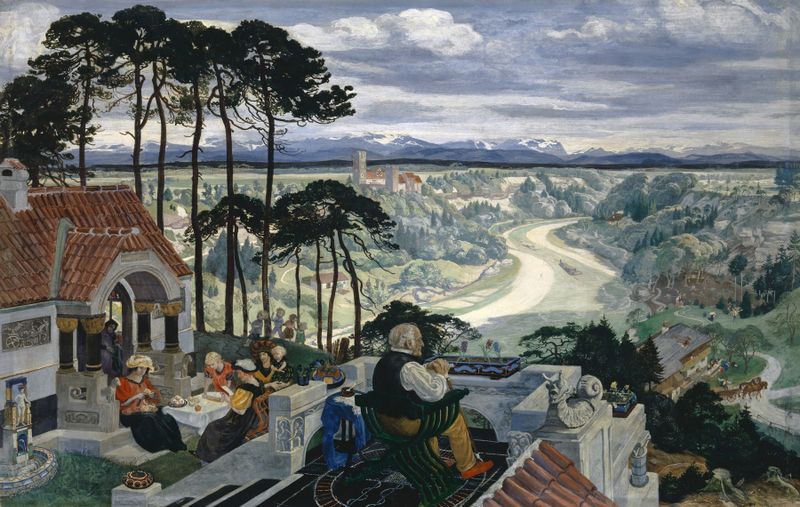
More Religious Art
Browse all →
The Return of the Prodigal Son
Rembrandt van Rijn

The Garden of Earthly Delights
El Bosco

Count Orgaz’ funeral
El Greco

The Hundred Guilder Print: the central piece with Christ preaching, the plate arched
Rembrandt van Rijn

The Descent from the Cross
Rogier van der Weyden

The return of the prodigal son
Rembrandt van Rijn