Landschaft — History & Facts
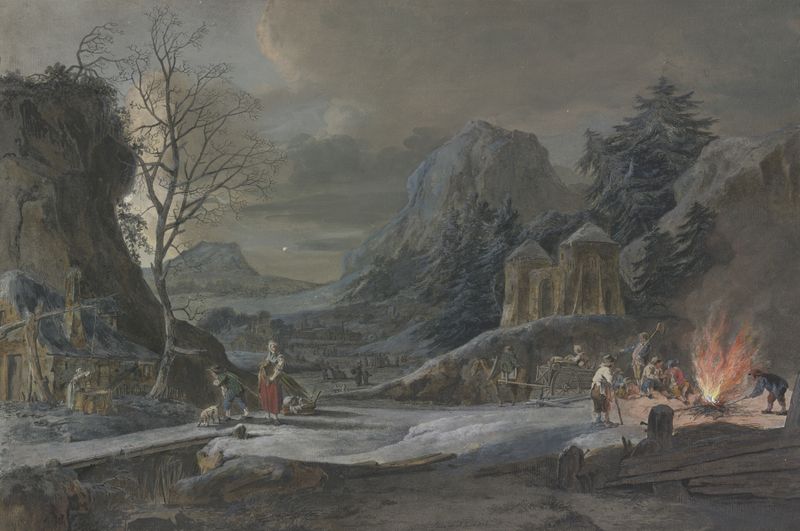
Can beauty exist without sorrow? In Landschaft, the question lingers in the air like a mist, inviting reflection on the interwoven nature of joy and melancholy. Look at the sweeping landscape where the rolling hills cradle the horizon, painted in soft greens and muted browns that evoke a sense of tranquility. Notice how the light spills gently over the scene, illuminating the delicate details of the foliage while casting subtle shadows that hint at the passage of time. The composition leads your eye toward a distant river, meandering gracefully, its shimmering surface a mirror of the sky’s soft blues and grays, inviting one to ponder what lies beyond. Within this serene vista, contrasts emerge: the vibrancy of life against the stillness of nature.
The lush vegetation juxtaposes the barren tree reaching skyward, a poignant reminder of change and decay in the cycle of existence. Each element, from the tiniest blade of grass to the expansive sky, seems to resonate with an unspoken narrative of awakening, suggesting that beauty is often accompanied by the weight of what once was. In 1777, Bernhard Hendrik Thier crafted Landschaft during a time when the European art scene was shifting towards Romanticism, embracing the emotive power of nature. As he painted this work amidst the tranquil landscapes of his homeland, he reflected the burgeoning fascination with nature’s sublime beauty, influenced by both contemporary movements and the personal experiences of his life.
This painting not only captures a moment in time but also serves as a bridge to the complex emotions that define the human experience.