Landschaft bei Palermo — History & Facts
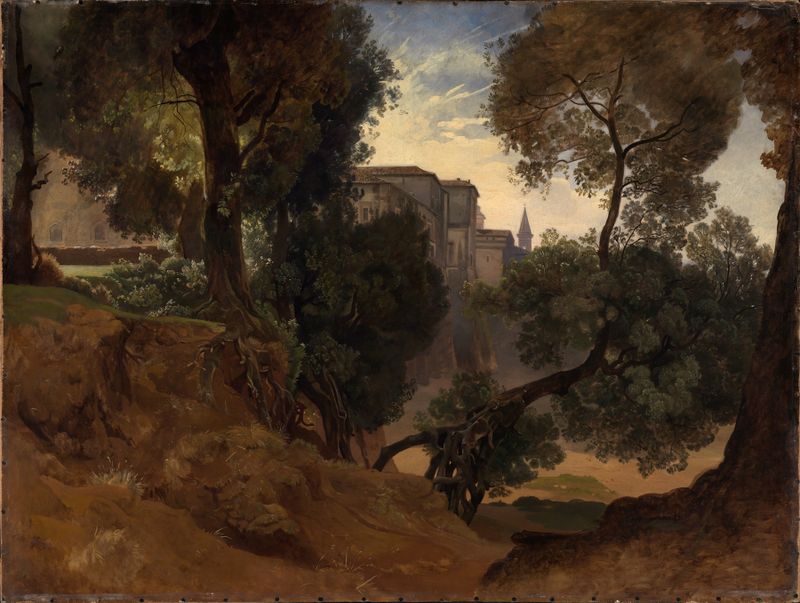
In the enchanting brushwork of 1854, a subtle obsession for nature’s allure emerges through a landscape that both captivates and conceals. Look to the horizon, where soft hills embrace the sky, their delicate contours rendered in a palette of greens and browns. Notice how the sun bathes the scene in golden light, casting shadows that dance among the trees. The composition draws the eye toward a distant archway, inviting exploration while simultaneously hinting at mysteries hidden just beyond the canvas’s edge.
The careful arrangement of elements conjures a sense of harmony, yet there is an undercurrent of longing that suggests a narrative steeped in complexity. On closer inspection, the interplay between light and dark reveals a tension that speaks of duality. The vibrant foliage contrasts with the ominous storms looming in the distance, symbolizing the fragility of beauty and the weight of obsession. Each brushstroke seems to whisper secrets of the artist's psyche, reflecting a yearning for connection to the landscape that transcends mere representation.
This tension between tranquility and unease invites contemplation, urging viewers to ponder what lies beneath the surface. Heinrich Ludwig painted this piece during a transformative era for landscape painting, a time when artists sought to capture the essence of nature with emotive depth. Working in Palermo, he was influenced by the Romantic movement’s emphasis on emotional experience, yet faced the challenge of establishing a voice that resonated within a shifting art world. This work showcases his dedication to both beauty and the complexities of human emotion, leaving a lasting impression of a moment where obsession and beauty intertwine.