Landschaft mit Bauernhäusern — History & Facts
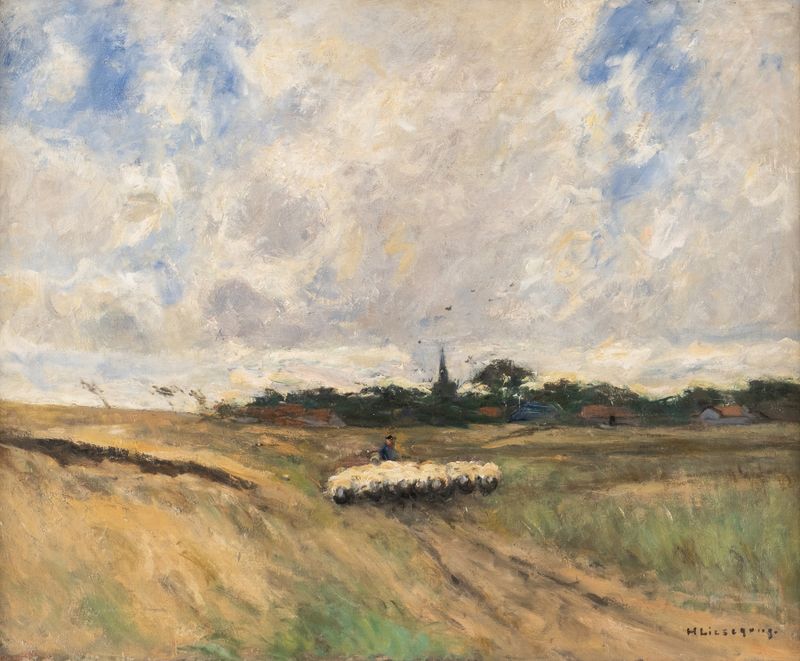
Could beauty survive in a century of chaos? In Landschaft mit Bauernhäusern, the essence of destiny unfolds through the tranquil embrace of rural life, offering a respite from the tumult of its time. Look to the left at the soft, undulating hills that cradle the quaint farmers' houses. A gentle light spills across the scene, illuminating the earthy tones of the land while casting deep shadows that hint at life's complexities. The carefully composed lines lead your gaze towards the horizon, where a serene sky blends seamlessly with the landscape, evoking a sense of calm amidst uncertainty.
The meticulous brushwork captures both the solidity of the structures and the delicacy of the surrounding nature, creating a harmonious balance that speaks to the resilience of rural existence. Yet, beneath the surface lies a poignant contrast: these humble dwellings stand resilient, yet they appear almost fragile against the backdrop of an ever-changing world. The juxtaposition of the vibrant greenery against the somber, muted colors of the houses suggests a struggle between nature's beauty and the weight of human destiny. The painting hints at forgotten stories, the lives of those who inhabit these homes, and the inevitable passage of time that shapes their existence. In 1884, Liesegang painted this work during a period marked by both artistic innovation and societal upheaval.
Living in Germany, he was influenced by the burgeoning Naturalism movement, which sought to depict life with unflinching honesty. As Europe grappled with rapid industrialization, Landschaft mit Bauernhäusern serves as a reminder of simpler times, capturing a fleeting moment of peace in a world on the brink of transformation.