Landschaft mit Feldern — History & Facts
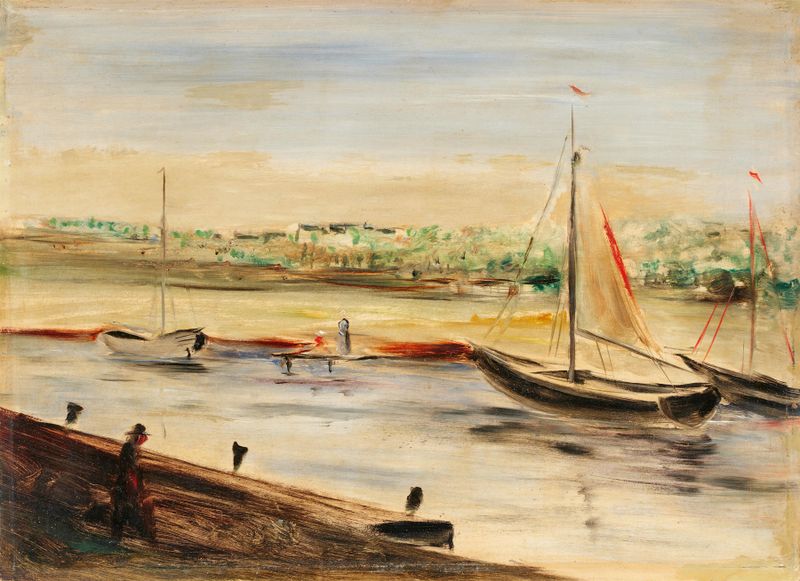
Can beauty exist without sorrow? In Landschaft mit Feldern, the essence of melancholy finds its expression through the vast, undulating fields and the sky heavy with promise yet tinged with the weight of loss. Look to the horizon, where verdant fields stretch across the canvas, bathed in a solemn light. The muted greens and earth tones draw the eye into a serene yet haunting landscape, inviting contemplation. Notice how the brushstrokes dance across the surface, creating a texture that feels almost tangible, as if the gentle swells of the land could whisper their stories.
The light, filtered through a canopy of clouds, casts a diffused glow; it hints at the transient beauty of nature while enveloping the scene in a somber mood. Beneath the tranquil surface lies an emotional tension between the allure of nature and the poignant absence of human presence. The fields may evoke a sense of nostalgia, reminding viewers of the lives once lived and the joys possibly lost within this quiet expanse. Furthermore, the interplay of light and shadow not only shapes the landscape but mirrors the duality of happiness and sorrow, suggesting that each moment of beauty is tinged with an awareness of its impermanence. Painted between 1930 and 1945, Landschaft mit Feldern emerges from a tumultuous period in Alfred Partikel's life and the broader context of European art.
This era was marked by political upheaval and the looming shadow of war, which deeply influenced artists seeking to escape reality through their work. In this painting, Partikel captures not just the landscape but also the spirit of his time, reflecting a world grappling with change and uncertainty.