Landschaftsstudie Haus mit Garten und Baum — History & Facts
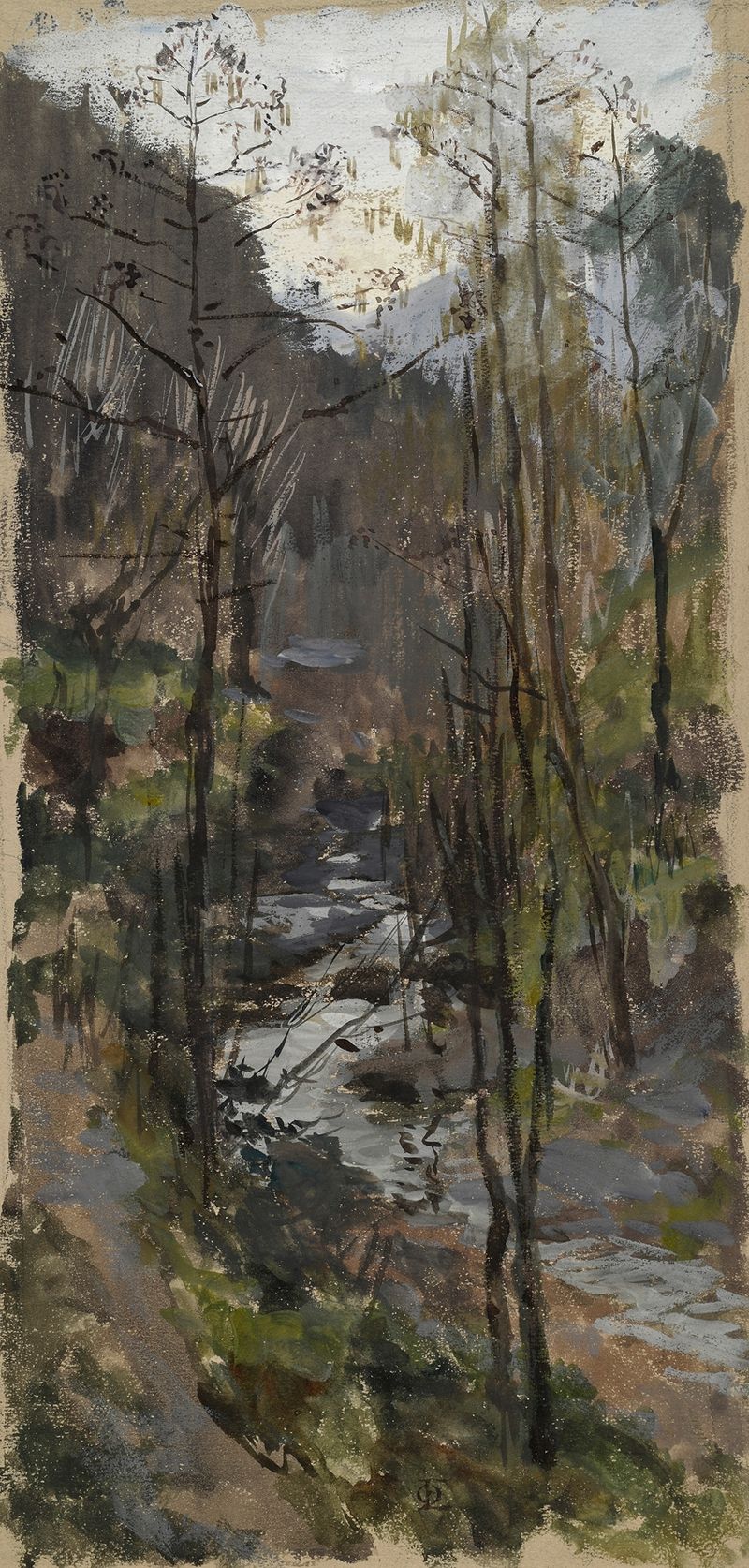
“Is it possible to find beauty in the quiet vulnerabilities of life?” In Landschaftsstudie Haus mit Garten und Baum, look to the foreground where a delicate interplay of greens and browns immediately draws your eye. The lush garden, framed by a sturdy tree, serves as a sanctuary, inviting one to contemplate the relationship between humanity and nature. Notice how the soft, dappled light filters through the leaves, casting gentle shadows that play across the quaint house, creating an atmosphere that feels both serene and ephemeral. As the viewer, you may find a subtle tension lurking beneath the surface.
The tree, while majestic, stands alone—a silent guardian over the domestic scene, symbolizing both protection and solitude. The harmonious colors, predominantly earthy tones interspersed with vibrant greens, evoke a sense of peace, yet there’s an underlying whisper of longing, a reminder of the transient beauty of the world, where truth reveals itself through quiet moments of reflection. Otto Eckmann created this piece in 1895 during a time when the art world was undergoing significant change. The late 19th century was marked by the rise of Impressionism and a growing interest in capturing the essence of everyday life.
Eckmann, a prominent figure in the Jugendstil movement, embraced these ideals, blending naturalism with a distinct stylization that sought to elevate the mundane into the realm of art. It was a period of personal and artistic exploration for him, as he navigated between the traditional and the avant-garde, ultimately shaping his unique vision.