Landschap met boerin en vee — History & Facts
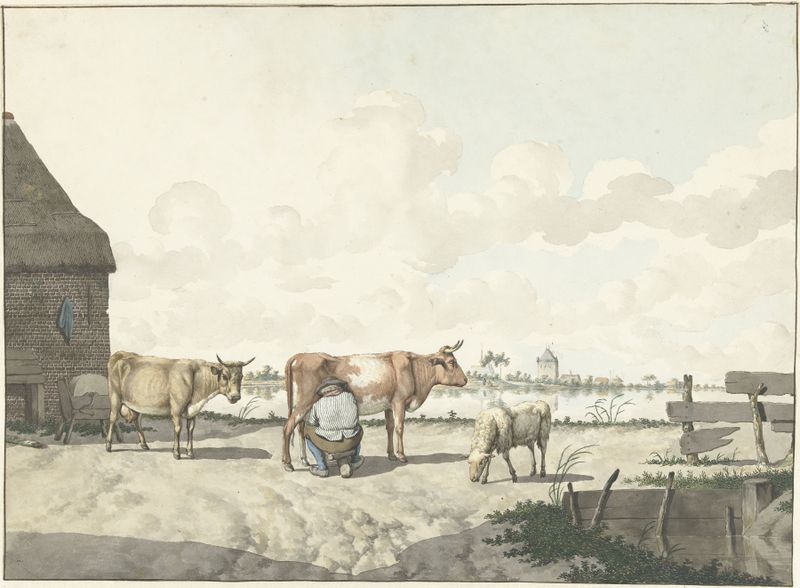
Who listens when art speaks of silence? In the stillness of a pastoral landscape, a quiet obsession unfolds, revealing life’s tender yet unyielding rhythms. Look to the left at the soft earth tones that ground the scene, where a farmer's simplicity intertwines with the vibrant greens of the fields. The juxtaposition of the woman and her livestock draws the eye across the canvas, emphasizing the delicate balance between humanity and nature. Notice how the light bathes the figures in a gentle glow, illuminating their toil yet casting long shadows that hint at the passage of time and the weight of existence. Within this serene setting lies a deeper tension—the farmer’s gaze, both focused and lost, reflects a devotion that borders on obsession.
The cattle, robust and rooted in their space, serve as silent witnesses to her labor, embodying a connection to the land that transcends mere necessity. The subtle brushwork captures fleeting moments; a flicker of movement, a breath of wind, ever so gently reminding us of the fragility of this existence. W. Barthautz painted Landschap met boerin en vee during a transformative period in the late 18th century, a time when the rural life began to be idealized in art.
Working in the Netherlands, he was part of a movement that embraced the bucolic beauty of the countryside, reflecting a growing appreciation for the simplicity found in agricultural life amidst the burgeoning industrial changes elsewhere. This piece stands as both an homage to and a meditation on the complexities of devotion and labor in a shifting world.