Landschap met rustende boer bij een paard — History & Facts
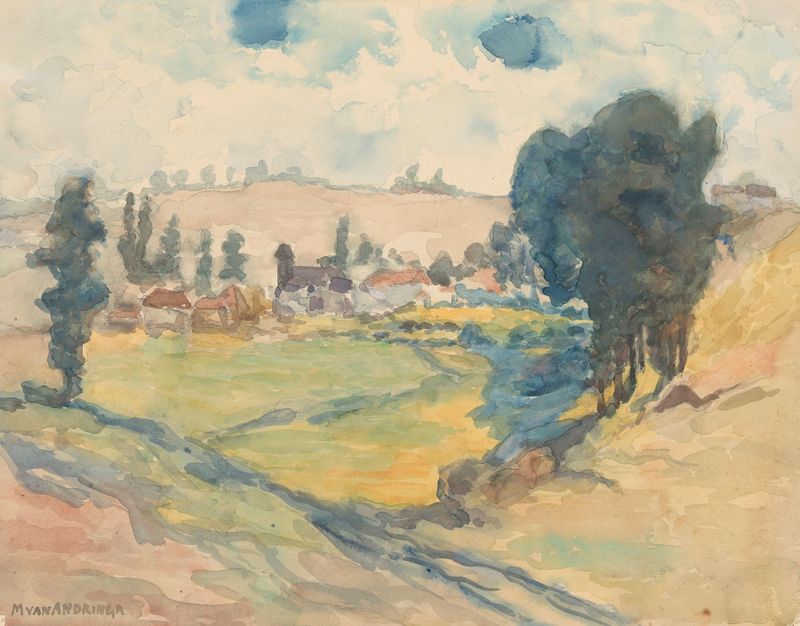
Could a single brushstroke hold eternity? In Landschap met rustende boer bij een paard, Martinus van Andringa captures a moment suspended in time, where the tranquil interaction between man and nature transcends the ordinary. This painting is a testament to the enduring legacy of simplicity, inviting viewers to ponder the weight of history that lingers in everyday scenes. Look to the left where a farmer, clad in rustic attire, leans against his horse, both figures serenely anchored in the lush landscape. Notice how the warm hues of ochre and green blend harmoniously, evoking a sense of peace that envelops the viewer.
The artist’s delicate brushwork brings life to the details: the texture of the horse's mane, the soft earth beneath their feet, and the gentle sway of grass in the breeze. The composition invites the eye to travel from the farmer’s contemplative gaze to the expansive horizon, grounding us in the authenticity of rural existence. Beneath the surface, this painting resonates with deeper themes of labor and rest, revealing the tension between toil and tranquility. The juxtaposition of the farmer’s weary posture against the vitality of the horse evokes a profound sense of connection to the land, while also hinting at the cyclical nature of life and work.
The use of light, dappling through the clouds, symbolizes hope and continuity, suggesting that moments of stillness are vital to the soul's endurance. Martinus van Andringa painted this work between 1874 and 1918, a period marked by notable societal changes in the Netherlands. As the world grappled with industrialization, his focus on rural life served as a poignant reminder of simpler, more harmonious times. This painting reflects not only his artistic journey but also a broader cultural legacy, celebrating the value of connection to the earth in an era of rapid transformation.