Landskap — History & Facts
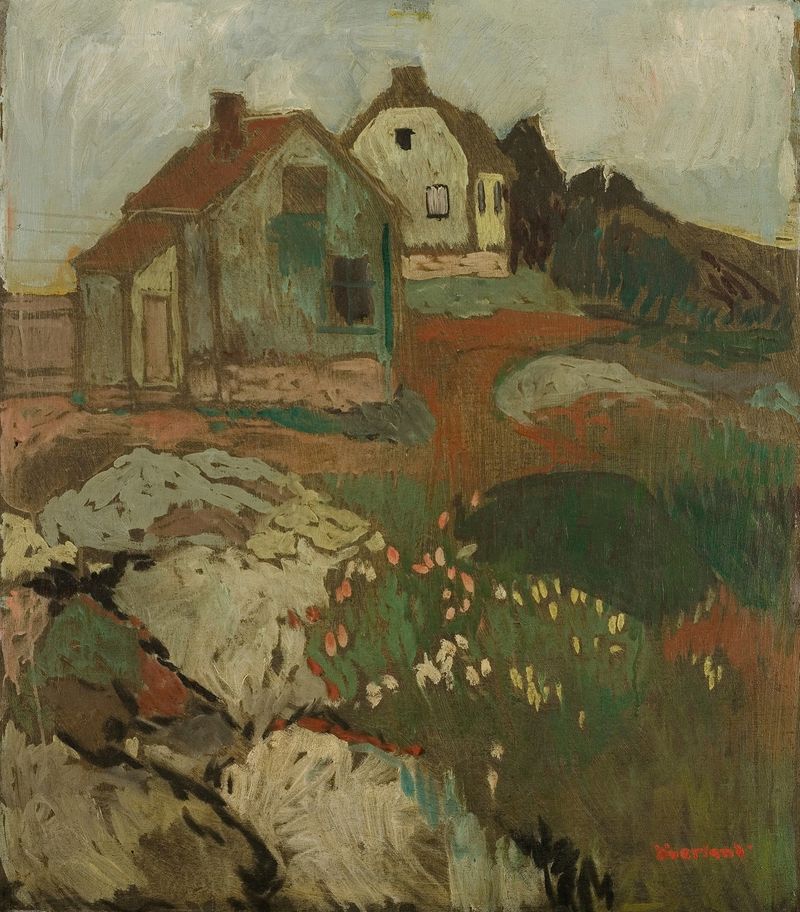
In the depths of artistry, there exists a tension that whispers of violence lurking beneath the surface of beauty. Look to the canvas, where muted hues converge with bursts of vibrant color, drawing the viewer's eye into the heart of the landscape. Notice how the rolling hills in the foreground clash with the dark, brooding sky—the way the light catches the edges of the forms creates a sense of foreboding. The brushstrokes are both energetic and chaotic, imbuing the scene with a palpable tension that suggests unrest, making the tranquil façade of nature feel fragile, as if it could shatter at any moment. Delve deeper into the contrasts presented here: the serenity of the land juxtaposed with the tempestuous sky evokes an unsettling calmness, hinting at a violence not immediately visible.
The sharpness of the lines suggests a struggle, while patches of color vibrate with an undercurrent of emotion. This dissonance invites numerous interpretations, where beauty and chaos coexist, challenging the observer to confront the underlying truths of existence—those that remain hidden in the everyday. In 1911, during a time of artistic upheaval, Øverland was navigating the complexities of modernism while living in Norway. As the world grappled with change and uncertainty, this work emerged amidst a burgeoning expressionist movement, reflecting both personal and collective angst.
It signals a turning point in his career, marked by a departure from tradition toward an exploration of emotional landscapes that resonate with the haunting echoes of human experience.