Landskap från Åre — History & Facts
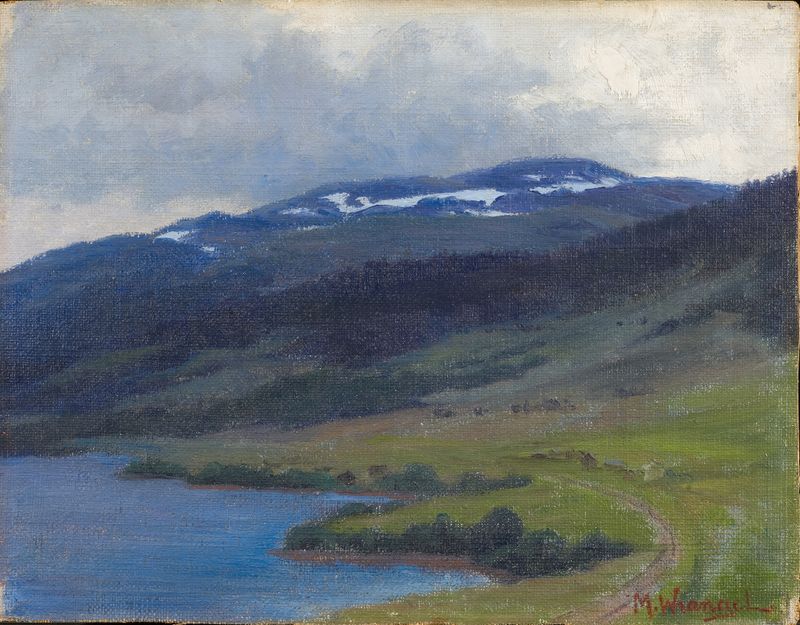
Did the painter know this moment would outlive them? In the quiet expanse of Landskap från Åre, a breathtaking solitude emerges, inviting the viewer into a world where time seems suspended, and loneliness breathes through the landscape. Focus first on the distant mountains, where cool hues of blue and gray dance together, evoking a sense of both majesty and isolation. Notice how the soft brushstrokes capture the gentle undulations of the terrain, while patches of sunlight break through the clouds, illuminating the foreground with a warmth that feels both inviting and distant. The composition balances vastness and intimacy, drawing your eye from the serene skyline down to the small details of the foreground, where the subtle interplay of shadow and light heightens the emotional resonance of the scene. Hidden within the beauty are layers of meaning that speak to the human experience.
The expansive landscape, though stunning, portrays an inherent loneliness, as if the mountains stand as silent witnesses to the passage of time and the solitude of existence. The contrast between the vibrant light and the shadowy valleys accentuates this tension, suggesting a duality where beauty intertwines with isolation. Each brushstroke seems to echo unspoken thoughts, inviting reflections on the nature of solitude amid the grandeur of nature. Maria Wrangel created Landskap från Åre during a period marked by her deep connection to the Swedish landscape.
Though the exact date remains unknown, it is believed to have been painted in the late 19th century, a time when she was exploring her artistic voice amidst a burgeoning movement that embraced naturalism in art. This piece embodies her ability to weave emotion and observation into a compelling visual narrative, reflecting both the serenity and solitude of the world around her.