Late Afternoon — History & Facts
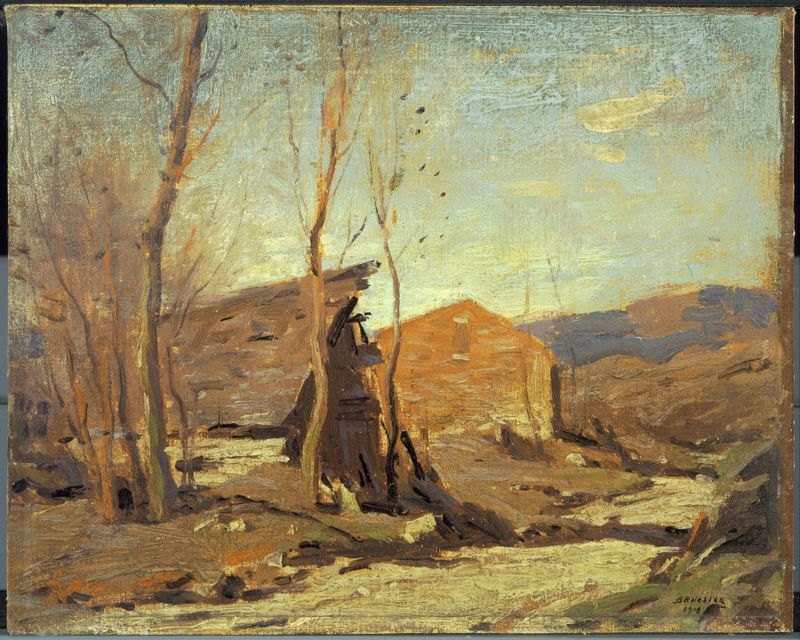
What if beauty was never meant to be finished? In George M. Bruestle’s Late Afternoon, this question lingers like the warm glow of the setting sun, inviting us to linger in a moment suspended in time. Look to the center, where the gentle light filters through the trees, illuminating the path that beckons toward a horizon shrouded in mystery. The brush strokes are soft yet deliberate, creating an ethereal quality that pulls the viewer into a serene embrace.
Notice how the earthy greens and golden yellows meld harmoniously, evoking a sense of nostalgia that speaks to both the heart and mind. The delicate interplay of light and shadow serves not only to beautify the scene but also to invite contemplation of what lies beyond the canvas. Hidden within the tranquil landscape are contrasts that evoke emotional tension—the fleeting nature of time reflected in the waning sunlight and the promise of what the evening might bring. The lush greenery, vibrant yet fading, hints at the bittersweet nature of memory and the inevitability of change.
This juxtaposition of vibrancy and stillness invites introspection, prompting the viewer to ponder their own experiences of beauty and transience. In 1901, Bruestle painted Late Afternoon during an era marked by a shift towards Impressionism, when artists began to explore the ephemeral qualities of light and atmosphere. He worked in the United States, where a growing appreciation for nature and landscape painting was emerging alongside the contemporary movements of his time. This work reflects not just his skill but also a broader reaction to the societal changes occurring at the dawn of the new century, encapsulating a moment of quiet reflection amidst the noise of life.