
Late Moon Rising (Wild Horse Creek) — History & Facts
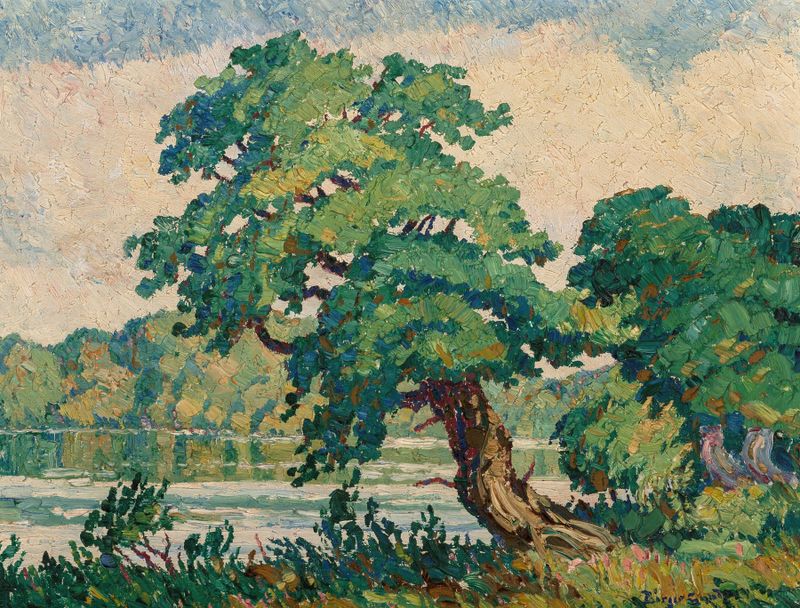
Where does light end, and longing begin? In Late Moon Rising (Wild Horse Creek), a delicate dance occurs between dusk and desire, as shadows and illumination entwine like whispered secrets. Look to the horizon, where the pale moon begins to ascend, casting silvery reflections upon the serene surface of the creek. Notice how the ethereal light melds with the rich, vivid greens and earthy browns of the surrounding landscape, creating a harmonious yet poignant contrast. The painter's brushwork is both confident and gentle, imbuing the scene with an almost palpable sense of tranquility that belies deeper undercurrents of emotion. Betrayal lies in the silence of the shadows that stretch across the water, hinting at untold stories and unfulfilled promises.
The vibrant colors invoke a bittersweet nostalgia, as the night encroaches upon the day, suggesting a moment suspended in time—one filled with both beauty and the weight of unspoken truths. The juxtaposition of light and dark elements encapsulates a longing for connection while simultaneously hinting at the inevitable solitude that comes with dusk's embrace. In 1923, while working in his studio in the United States after emigrating from Sweden, the artist was grappling with his identity as both a painter and foreigner. This period marked a significant evolution in his style, as he sought to capture the American landscape's unique essence.
The art world was shifting, and he was part of a movement that celebrated the natural world, reflecting both personal and collective feelings of displacement and yearning.
More Artworks by Birger Sandzén
Browse all →
Sunset Over the Trees
Birger Sandzén

View of Western Kansas
Birger Sandzén

Near the Timberline, Rocky Mountains, Colorado
Birger Sandzén

Arroyo in the Foothills, Colorado
Birger Sandzén
Little Arkansas River
Birger Sandzén

Rocky Mountain Landscape
Birger Sandzén

Lake at Sunset, Colorado
Birger Sandzén

Cottonwood Trees and Pond
Birger Sandzén





