
Lausanne, von Nordwesten — History & Facts
What if silence could speak through light? In the stillness of twilight, the landscape breathes with an unspoken obsession, each brushstroke standing as a testament to nature's quiet allure. Look to the left where the soft hues of the setting sun meet the contours of the distant mountains, their silhouettes merging seamlessly into the twilight sky. The gentle gradient of blues and purples envelops the scene, while the warmly lit buildings nestled in the valley draw your gaze as if they are whispering secrets of life within. Notice how the artist employs delicate strokes to evoke the rippling water below, mirroring the tranquility above, and allowing the viewer to feel the tender embrace of a place caught between reality and dream. Delve deeper into the painting, and you'll uncover a profound tension between light and shadow, manifesting the obsession with capturing fleeting moments.
The light illuminating the structures hints at human presence yet also invites solitude, suggesting a duality between civilization and the natural world. The reflections in the water seem to echo the effort to grasp what is ultimately ephemeral—a reminder of the beauty that exists in silence, even when it feels just out of reach. During this unknown period, the artist found himself in a transitional phase of expression, navigating the evolving landscape of 19th-century Swiss art. Though the exact date of creation remains elusive, it is clear that Biedermann sought to encapsulate the essence of Lausanne, a city marked by its picturesque settings.
This era, filled with burgeoning Romantic sensibilities, urged artists to explore the emotional resonance of landscapes, an endeavor Biedermann pursued with fervor.
More Artworks by Johann Jakob Biedermann
Browse all →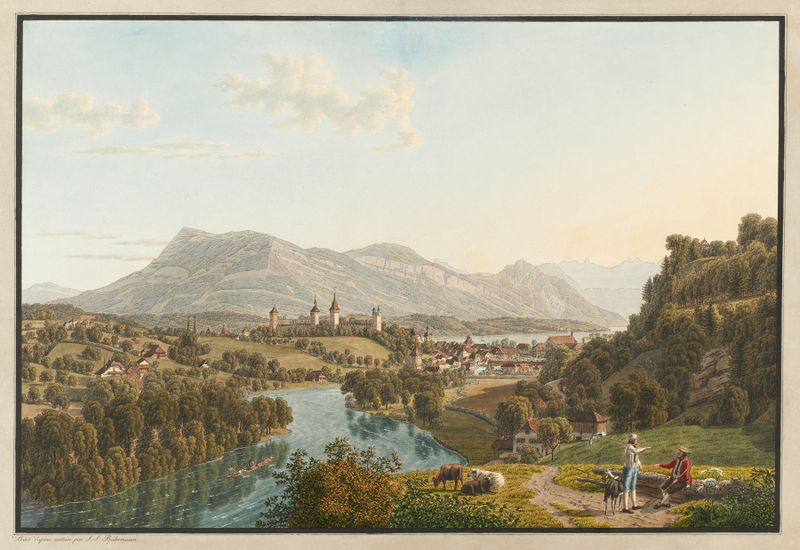
Luzern, von Nordwesten
Johann Jakob Biedermann

Sankt Gallen, von Norden
Johann Jakob Biedermann

Le Glacier nommé Rosenlaui, à côté du Wetterhorn
Johann Jakob Biedermann

Gottstatt, Kloster, von Nordwesten
Johann Jakob Biedermann
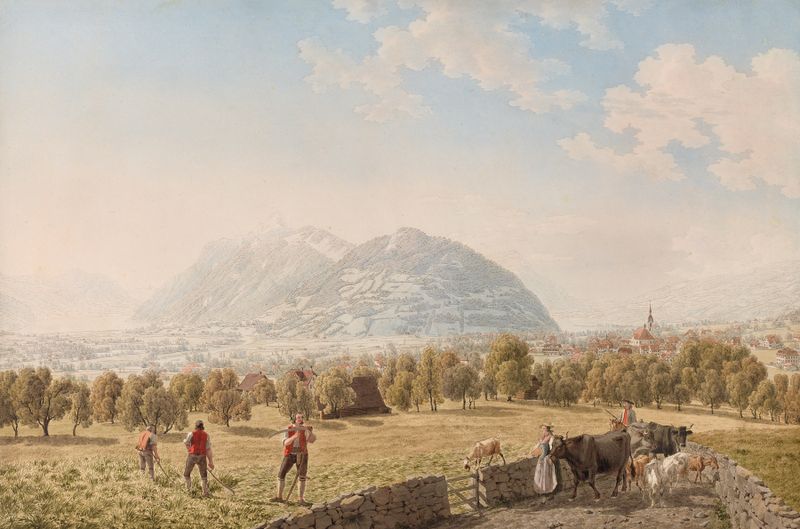
Schwyz, von Osten
Johann Jakob Biedermann

Twann und Bielersee von Nordosten
Johann Jakob Biedermann

Luzern, von Nordwesten
Johann Jakob Biedermann

Luzern, von Südwesten
Johann Jakob Biedermann
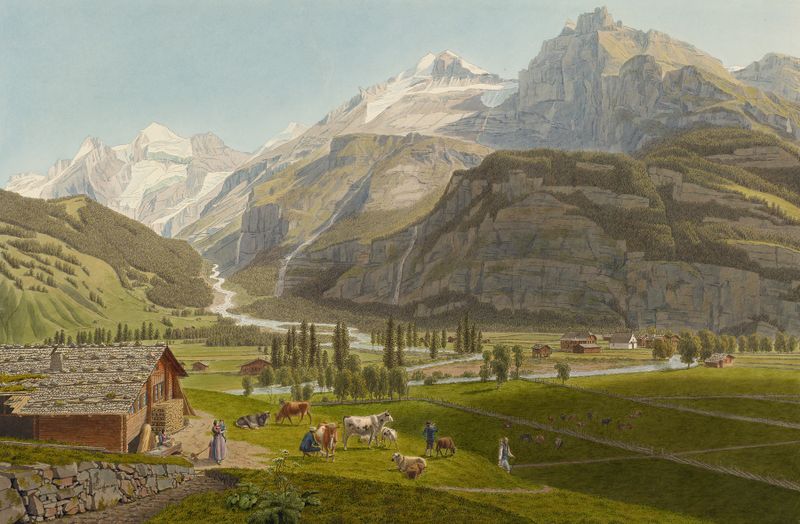
Kandersteg und das Kandertal, von Norden
Johann Jakob Biedermann

Schaffhausen, von Westen
Johann Jakob Biedermann





