Le Chemin De La Maloche — History & Facts
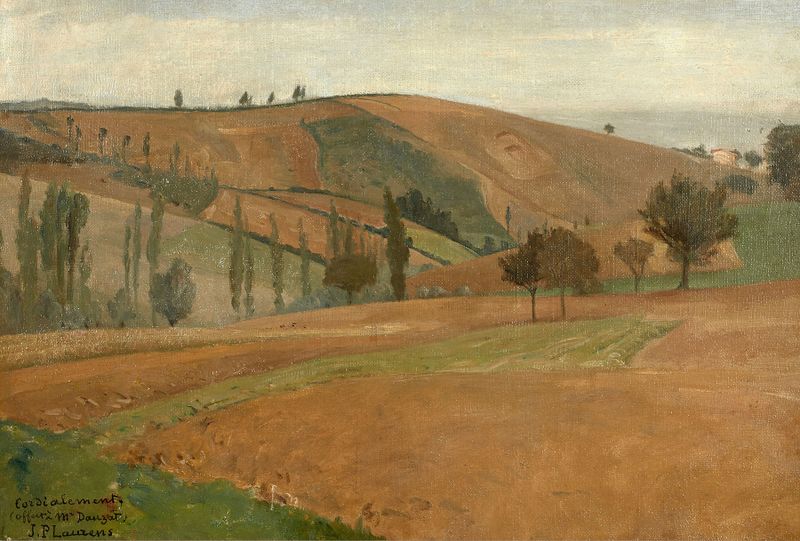
Is this a mirror — or a memory? In Le Chemin De La Maloche, Jean-Paul Laurens invites us to reflect on the thin veil between life and death, capturing a poignant moment of introspection that transcends the passage of time. Look to the left, where a solitary figure stands on a rustic pathway, enveloped in somber hues of browns and grays. The contrast between the muted landscape and the soft, almost ethereal light casts a subtle glow on the figure, emphasizing their isolation. Notice how the textures of the earth blend seamlessly into the figure’s attire, suggesting a deep connection to the land and the inevitability of mortality.
Each brushstroke carries a weight, echoing the silent thoughts that linger in the air. As you examine the painting further, consider the delicate balance between the figure’s stillness and the chaotic environment surrounding them. The winding path symbolizes the journey of life, fraught with uncertainty, while the distant hills evoke a sense of horizon — both an end and a promise. The juxtaposition of light and shadow serves to heighten the tension between hope and despair, urging viewers to confront their own fleeting existence.
Each element contributes to a deeper understanding of mortality, urging a contemplation of what lies ahead. In 1878, Laurens painted this piece during a time of personal and artistic reflection, working in the milieu of the French academic tradition. His exploration of themes related to life and death found resonance in a world grappling with rapid industrial change and shifting philosophical beliefs. Amidst this backdrop, Le Chemin De La Maloche emerged as a poignant commentary on the human condition, inviting viewers to ponder their own pathways through the landscape of existence.