
Le Château-Gaillard, après-midi — History & Facts
It captures the essence of a moment suspended in time, vibrating with the pulse of life. A scene unfolds before us, where nature and architecture harmonize, each stroke inviting us to delve into the movement that surrounds them. Look to the left, where the crumbling stone walls of the fortress rise against a backdrop of soft blues and grays; the viewer's gaze is immediately anchored there. Notice how the artist employs a dynamic brushwork that suggests the rush of wind through the trees and the gentle ripple of water beneath the castle’s watchful gaze.
Splashes of sunlight break through the clouds, illuminating the landscape and casting lively shadows that dance upon the grassy expanse, creating a sense of depth and vibrancy. As the eye wanders, subtle contrasts emerge between the solidity of the ancient structure and the ephemeral qualities of the atmosphere. The heavy stone contrasts with the delicate, swirling clouds, hinting at the passage of time and the relentless march of nature. Here, Maufra captures more than just a place; he encapsulates a fleeting moment where the past stands strong against the ephemeral present, evoking a sense of nostalgia and reverence. In 1903, while working in France, the artist captured Le Château-Gaillard, après-midi amid the burgeoning movement of Impressionism.
Maufra was influenced by the changing world of art, moving away from strict realism towards a style that embraced light, color, and emotional resonance. During this period, he was seeking to merge observation with feelings, reflecting a growing interest in how landscapes could embody deeper narratives and experiences.
More Artworks by Maxime Maufra
Browse all →
Le pont de l’Isle-Adam ou le Vieux pont
Maxime Maufra

Féérie nocturne: Exposition Universelle Paris 1900
Maxime Maufra
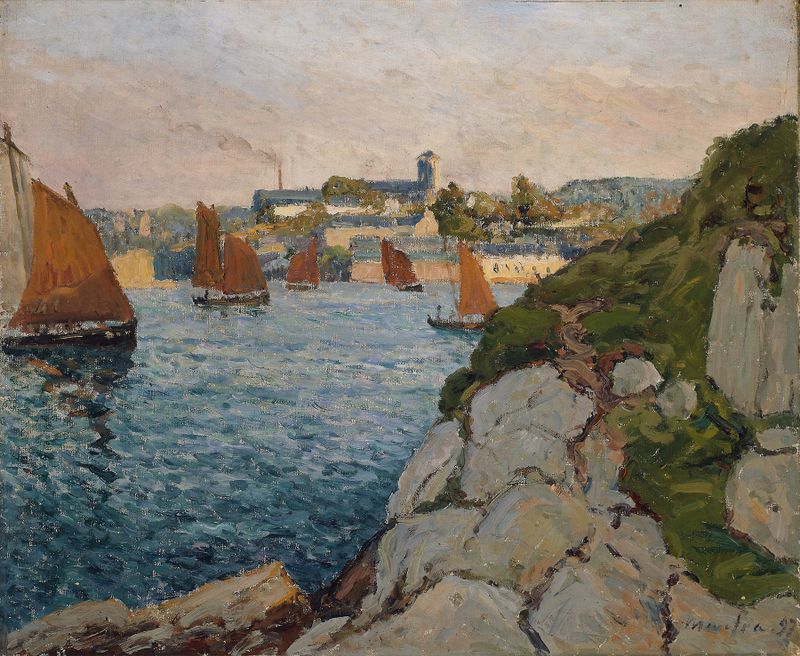
Douarnenez in Sunshine
Maxime Maufra
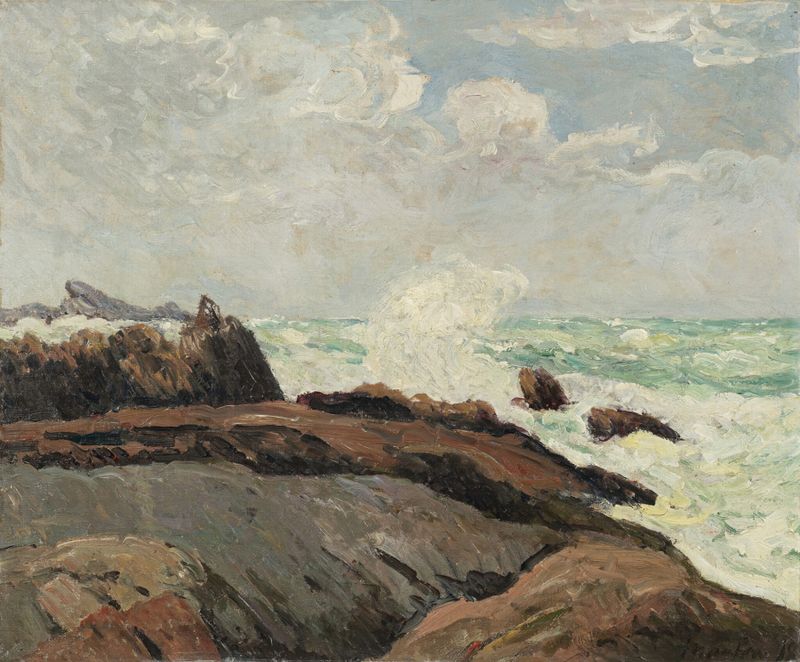
Mer forte à Saint-Guénolé Penmarc’h
Maxime Maufra

Marée Basse À La Plage De Port-Blanc, Presqu’île De Quiberon
Maxime Maufra
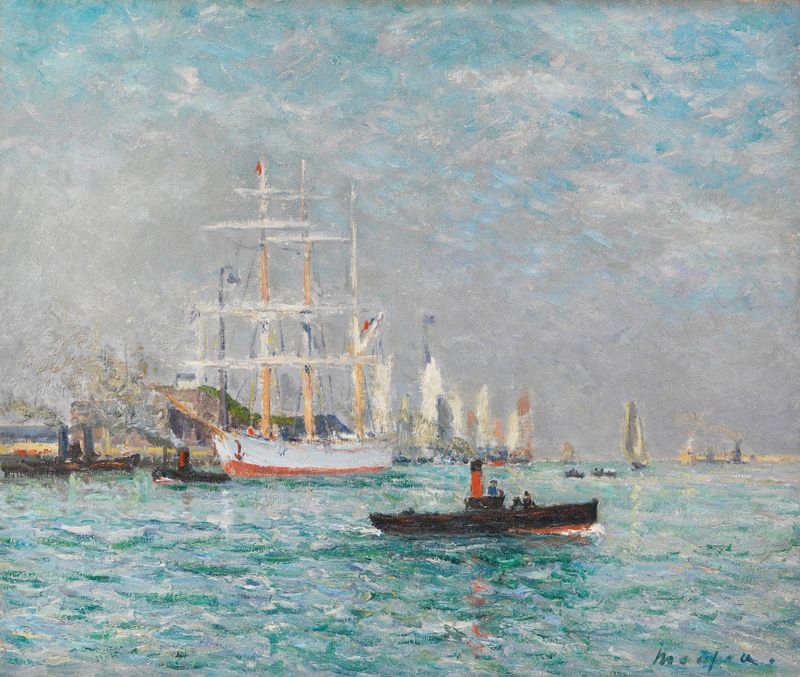
Entré d’un trois-mats, Le Havre
Maxime Maufra

Les rochers du château de Dinan, Morgat, Novembre 1903
Maxime Maufra
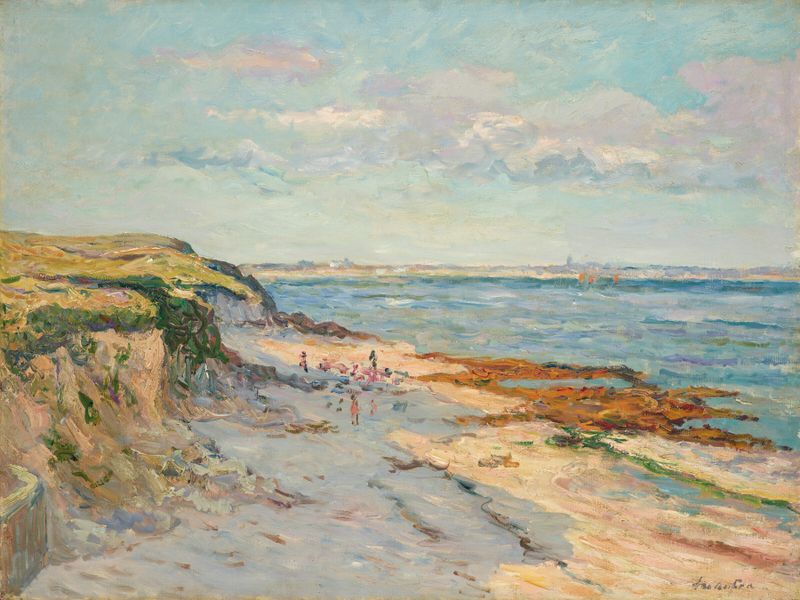
La Plage de Kerhostin, Morbihan
Maxime Maufra
Rochers au soleil couchant
Maxime Maufra
Soir D’orage À Kerhostin
Maxime Maufra





