
Le moulin — History & Facts
What truths lie hidden in the quiet corners of creation, waiting to be uncovered by those willing to look deeper? In the stillness of Le moulin, a sense of nostalgia intertwines with fleeting moments, inviting reflection on the nature of existence and the passage of time. Focus on the windmill, centrally poised against a backdrop of gently swirling clouds and muted foliage. Majestic yet forlorn, it stands as both a witness and participant in the unfolding landscape. The delicate palette of earthy tones—soft whites, gentle greens, and muted browns—harmonizes with the light, casting an ethereal glow that accentuates the structure's age and wear.
Notice the interplay of shadow and illumination; the details of the mill's worn wooden beams invite a tactile response, grounding the viewer in history while evoking a sense of longing. Beneath the serene exterior lies a poignant dichotomy. The windmill, emblematic of industry and progress, is contrasted by the surrounding tranquility of nature, suggesting a tension between human ambition and the simplicity of rural life. The slightly tilted perspective enhances the sense of unease, hinting at the impermanence of both structures and dreams.
Through this lens, the work becomes not merely a depiction, but a reflection on the fragile balance between human endeavor and the natural world. Created during a transformative period in art history, this piece emerged amid the late Romantic movement, between 1772 and 1829, in France. Demarne was influenced by the shifts in society and the rise of individual expression in art, as well as the Neoclassical ideals that preceded it. In this context, Le moulin serves not just as a visual experience, but as a commentary on the changing landscape of both art and human experience.
More Artworks by Jean-Louis Demarne
Browse all →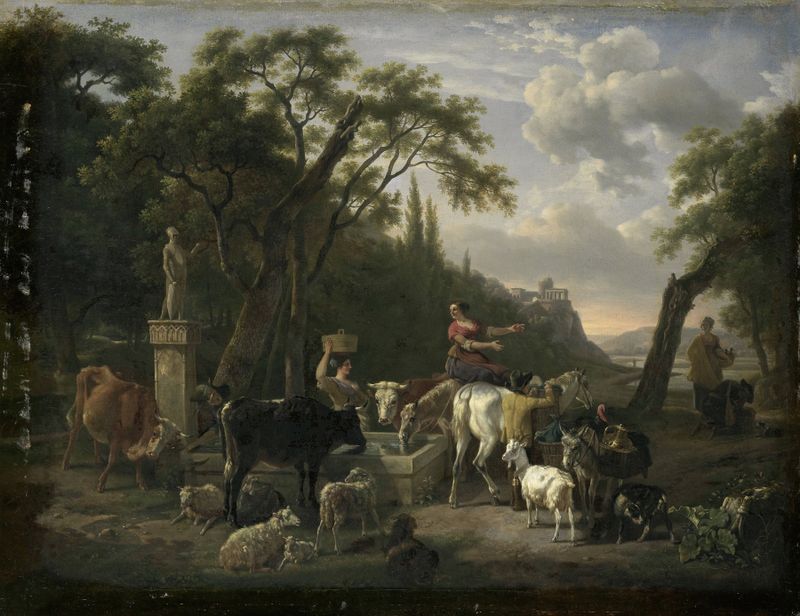
Italian Landscape with Shepherds and Animals at a Fountain
Jean-Louis Demarne

Landscape with a waterfall
Jean-Louis Demarne
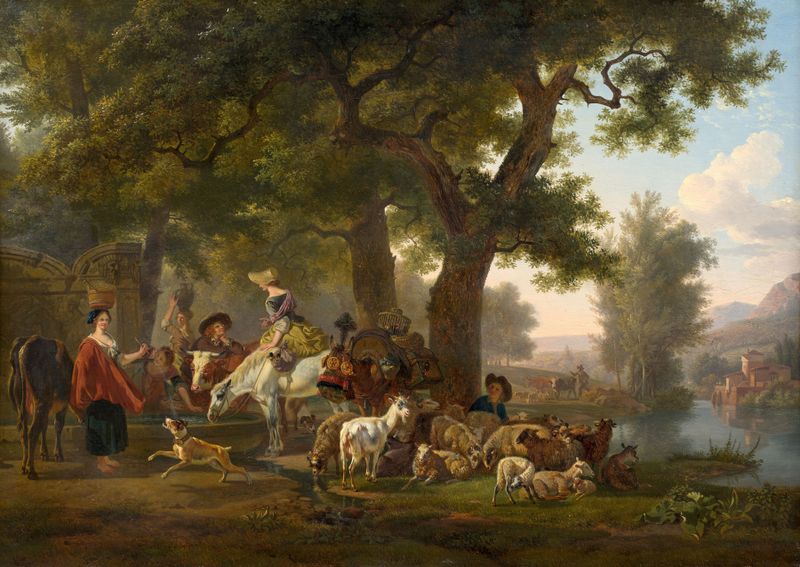
The Halt
Jean-Louis Demarne

Scène champêtre
Jean-Louis Demarne

Retour de pêche
Jean-Louis Demarne
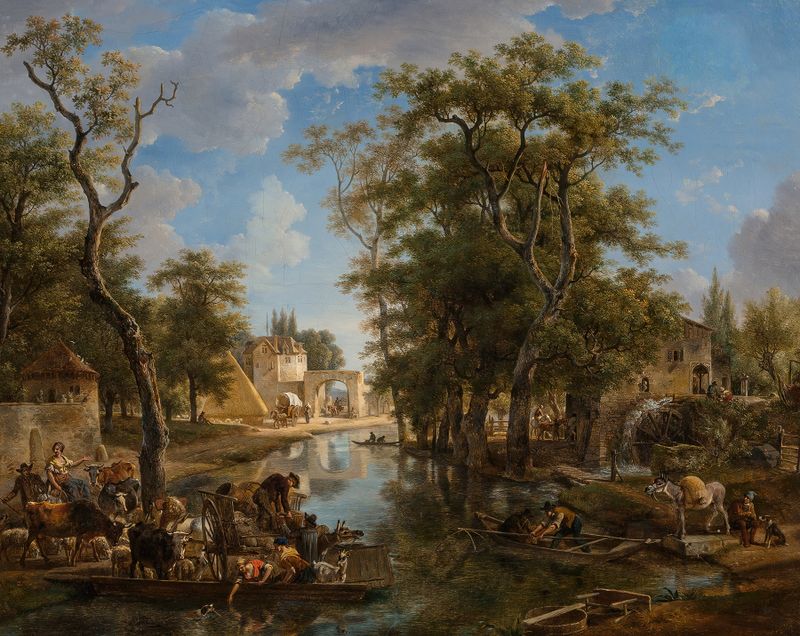
A lively canal scene with ferries and boats conveying townspeople and animals
Jean-Louis Demarne
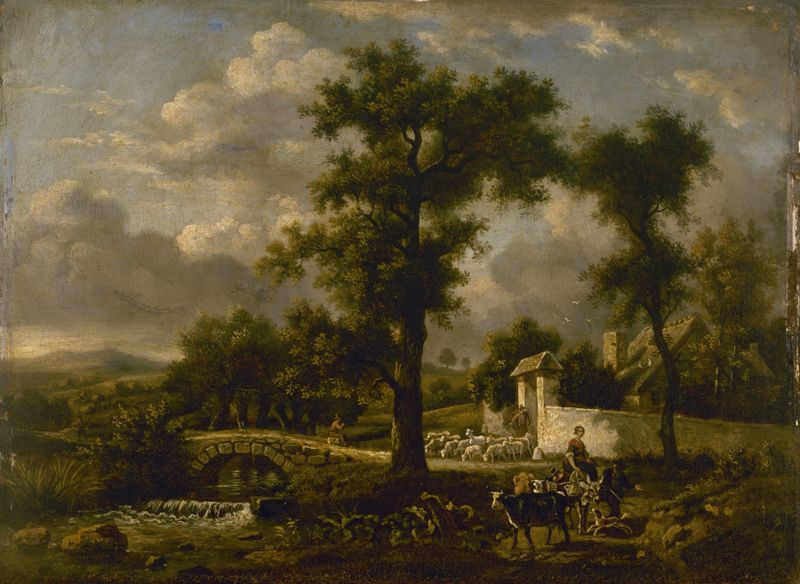
Scène champêtre
Jean-Louis Demarne

Merry journey
Jean-Louis Demarne





