
Le Pavillon de chasse de M. de Jullienne, ruelle des Gobelins — History & Facts
Could a single brushstroke hold eternity? In Le Pavillon de chasse de M. de Jullienne, ruelle des Gobelins, the illusion of a moment frozen in time beckons the viewer to explore its secrets. Focus on the pavilion's architectural elegance, where soft hues of pastel greens and warm ochres blend seamlessly under a gentle wash of cobalt sky. The brushwork, both precise and fluid, invites your gaze to dance along the façade, where light plays upon the surfaces, creating delicate shadows that whisper stories of history.
Notice how the surrounding foliage frames the structure, lending an air of intimacy that draws you deeper into this serene scene. As you delve further, hidden narratives begin to unfold. The juxtaposition of the natural landscape against the manmade structure evokes a tension between civilization and the wild—a reminder of humanity's place within nature. Each leaf and petal holds significance, reminding us of the passage of time and the ephemeral beauty of life, while the pavilion stands resolute, embodying permanence amidst the transient. In 1900, Martellière painted this work during a period marked by the rise of Impressionism, which sought to capture fleeting moments.
Living in France, he was influenced by his contemporaries, channeling their innovations while developing his own unique style. The artwork reflects not only his artistic journey but also a broader cultural shift towards appreciating the interplay of light, color, and the transient beauty found in everyday life.
More Artworks by Paul Martellière
Browse all →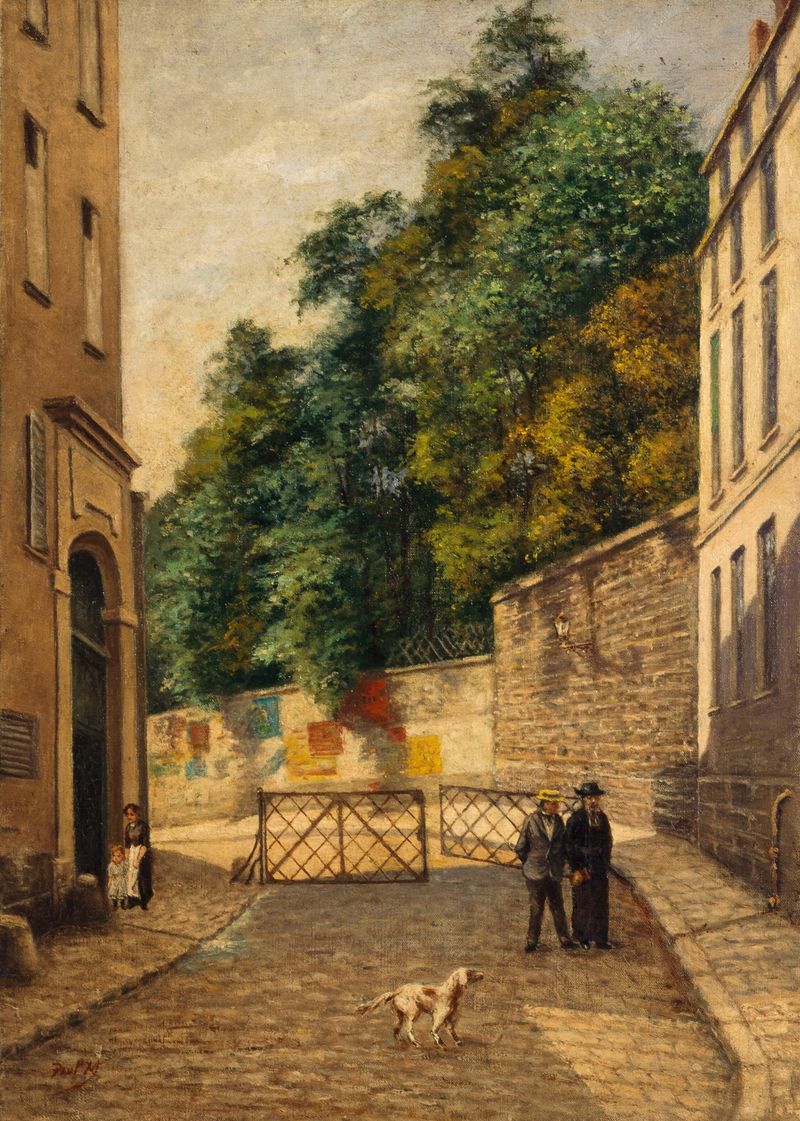
More Architecture Art
Browse all →
The statue of Liberty
Frédéric Auguste Bartholdi

View of Houses in Delft, Known as ‘The Little Street’
Johannes Vermeer

View of Houses in Delft, Known as ‘The Little Street’
Johannes Vermeer

The Cathedral in Rouen. The portal, Grey Weather
Claude Monet

The yellow house
Vincent van Gogh

The Church in Auvers-sur-Oise, View from the Chevet
Vincent van Gogh