Le percement de l’avenue Junot, à Montmartre — History & Facts
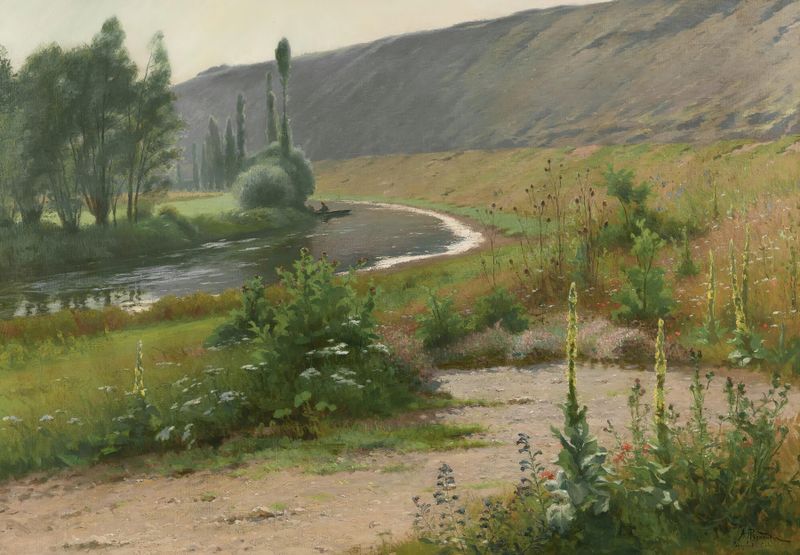
What if beauty was never meant to be finished? In the heart of Montmartre, a moment unfolds, caught between the innocence of nature and the encroachment of modernity. Focus on the delicate interplay of light and shadow as they dance across the cobblestone path, guiding your gaze toward the vibrant green foliage that frames the scene. The artist’s brushwork brings the trees to life, their leaves shimmering under the soft sun, while the muted palette of the buildings evokes a sense of harmony. Notice how the winding avenue invites the eye to venture deeper into the painting, suggesting an exploration of both place and time. Hidden within the layers of paint are the contrasts of innocence and industrialization, life and creation.
The lush greenery represents nature’s resilience, standing in quiet defiance against the urban development that threatens to reshape the landscape. Meanwhile, the figures, delicate and fluid, embody the fleeting moments of joy and playfulness, reminding us of the simple pleasures that exist even as change looms on the horizon. Alfred Renaudin created Le percement de l’avenue Junot, à Montmartre in 1910, amidst a rapidly evolving Paris. During this period, the city was vibrant with artistic movements, and Renaudin found himself at the intersection of tradition and modernity.
As the world outside began to embrace the chaos of progress, he sought solace in the purity of nature, capturing a tranquil moment that spoke to the innocence still present in the heart of the bustling metropolis.