Le pont du Carrousel — History & Facts
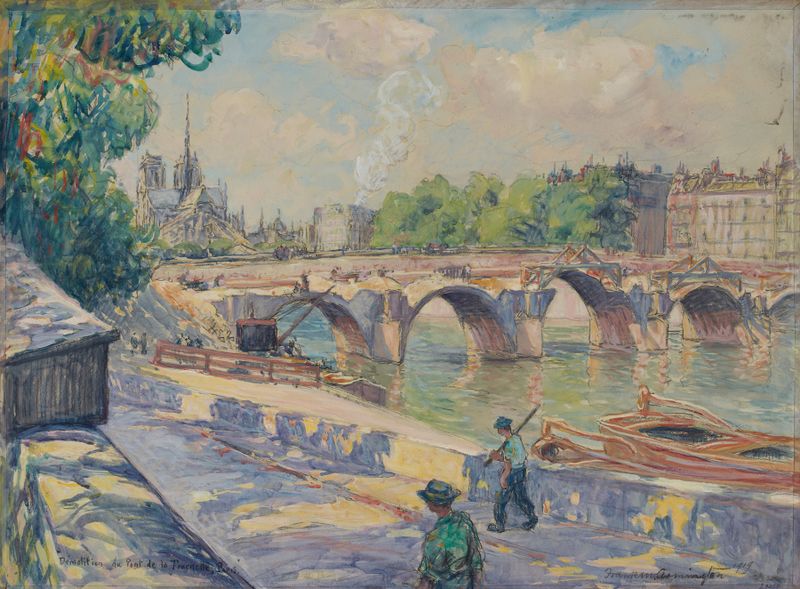
Is this a mirror — or a memory? In the delicate interplay of light and shadow, the essence of a moment lingers like a whisper, beckoning viewers to ponder their own reflections. Focus on the soft hues that wash over the canvas, where the faint blues and warm golds create a serene atmosphere. Look to the bridge nestled in the foreground, its graceful arches leading the eye into a web of reflections shimmering across the water. As you trace the subtle strokes of the artist’s brush, notice how the colors blend, blurring the boundaries between the scene and the memories that it evokes, inviting a sense of nostalgia. Delving deeper, one can sense a quiet tension in the painting.
The juxtaposition of the serene water and the underlying current of human activity speaks to the transient nature of life, where moments are fleeting yet indelibly captured. The silhouettes of figures in the distance hint at stories untold, remnants of their presence echoing in the stillness, provoking thoughts of connection and isolation. The composition invites contemplation, suggesting that what is seen may often be layered with what is felt. Created in 1914 while living in Paris, Armington was immersed in a city vibrant with artistic innovation, yet on the brink of turmoil as World War I loomed.
This painting, with its focus on the Carrousel Bridge, encapsulates the tension of the era—beauty amidst uncertainty—reflecting both a personal touch and the broad strokes of historical change.