Le Village — History & Facts
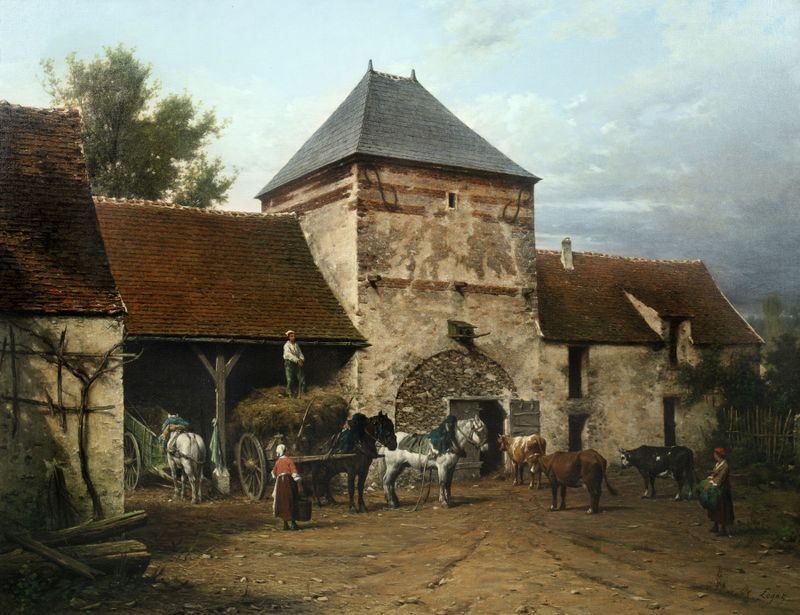
Who listens when art speaks of silence? In a world where noise often drowns truth, Le Village invites us to pause and reflect on the whispers of a life lived simply. Look to the center where the village unfolds, a tapestry of modest homes and winding paths, each telling a story of its own. Notice how the muted earth tones intertwine with the cool blue sky, creating a harmonious balance that grounds the scene. The gentle brushstrokes evoke a sense of tranquility, while the soft light appears to caress the rooftops, inviting the viewer to linger. Yet, beneath this serene façade lies a tension, a subtle contrast between the stillness of village life and the inevitable passage of time.
The juxtaposition of the vibrant greens of the fields against the muted tones of the structures hints at an underlying vibrancy, a pulse of life that is often overlooked. Each shadow holds a hidden depth, suggesting layers of emotion and unspoken stories, urging us to seek the truth beneath the surface. Léon Légat painted this piece during a period when he was deeply immersed in the post-impressionist movement, likely in the early 20th century. His focus on everyday scenes reflected a desire to capture the essence of ordinary life amid societal change.
At this time, the art world was shifting, responding to new ideas and perspectives, and Légat's work emerged as a testament to the beauty found in simplicity and truth.