Leiston Abbey, Suffolk — History & Facts
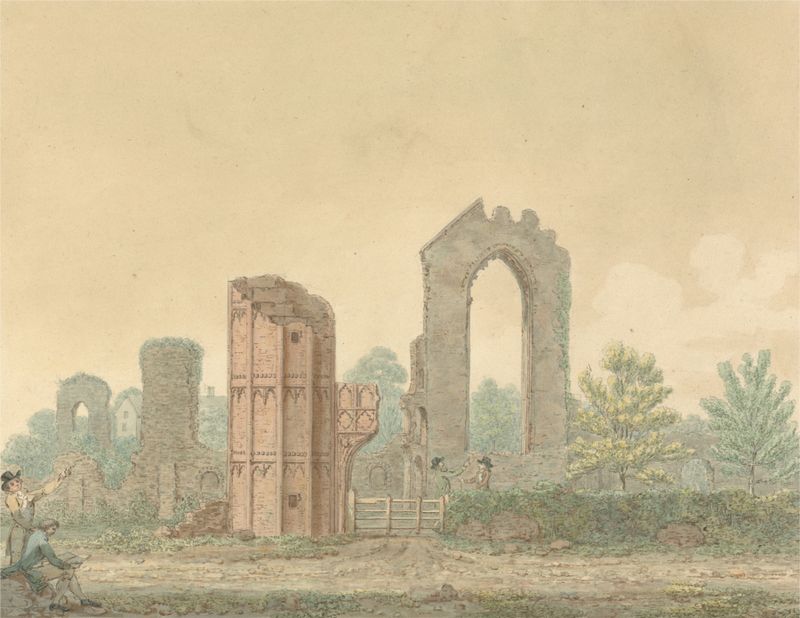
In the stillness of a past moment, longing intertwines with the quiet beauty of a landscape, evoking an echo of what once was. Focus on the verdant greens that stretch across the canvas, where the ghostly presence of Leiston Abbey emerges, its crumbling silhouette softened by the embrace of nature. The artist deftly plays with light and shadow, allowing soft rays to dance upon the weathered stone, creating a sense of nostalgia that seeps into every corner. Notice how the delicate brushwork suggests the texture of both the foliage and the ruins, as if reverberating with the whispers of history. In the interplay between the sprawling landscape and the ancient structure, a poignant contrast arises: the permanence of nature against the transience of human creation.
Each element in the composition contributes to a sense of yearning, drawing the viewer into reflections of loss and the inevitability of time. The distant horizon hints at both hope and melancholy, inviting one to consider what remains when the echoes of life fade away. This artwork was created during an era when Isaac Johnson sought to explore the depths of English landscapes, likely around the mid-19th century. At this time, the Romantic movement was flourishing, emphasizing emotion and nature.
Johnson’s work reflects the shifting values of society, as it grappled with the intersections of history, memory, and the passage of time, embodying the artist's desire to capture lasting beauty amidst the fleeting moments of life.