
Les Falaises rouges d’Octeville, Seine-Inférieure — History & Facts
What secret hides in the quiet of the canvas? In Les Falaises rouges d’Octeville, Seine-Inférieure, vivid hues embrace a landscape that seems almost to breathe, inviting us into its tranquil embrace and hinting at a deeper transcendence. Look to the center, where bold reds and earthy browns of the cliffs rise dramatically against the cool blue of the sea. The brushstrokes are vivid and unrestrained, capturing the essence of nature rather than its mere likeness. Notice how the sunlight bathes the cliffs, casting ephemeral shadows that dance across the surface, creating a dialogue between light and texture that breathes life into the scene.
Each stroke is deliberate yet instinctive, a testament to the artist’s emotional engagement with the landscape. The interplay between the serenity of the water and the rugged cliffs suggests a juxtaposition between stability and flux. Look closely at the gentle waves lapping against the shore, their rhythmic movement contrasting with the stolid presence of the cliffs. This tension speaks to the larger narrative of nature’s eternal cycle—where permanence and change coexist, urging the viewer to ponder their own place within this continuum.
The color palette, rich yet restrained, evokes a sense of peace mingled with the sublime, as if the landscape holds timeless secrets. In 1905, Maxime Maufra was immersed in the Impressionist movement, painting from his studio in Brittany, France. This period was marked by his exploration of color and light, where he sought to capture the essence of landscapes with emotional depth. Art at the time was shifting towards greater expressionism, and Maufra’s work reflected this transition, blending realism with a sense of personal interpretation, ultimately allowing nature to narrate its own stories.
More Artworks by Maxime Maufra
Browse all →
Le pont de l’Isle-Adam ou le Vieux pont
Maxime Maufra

Féérie nocturne: Exposition Universelle Paris 1900
Maxime Maufra
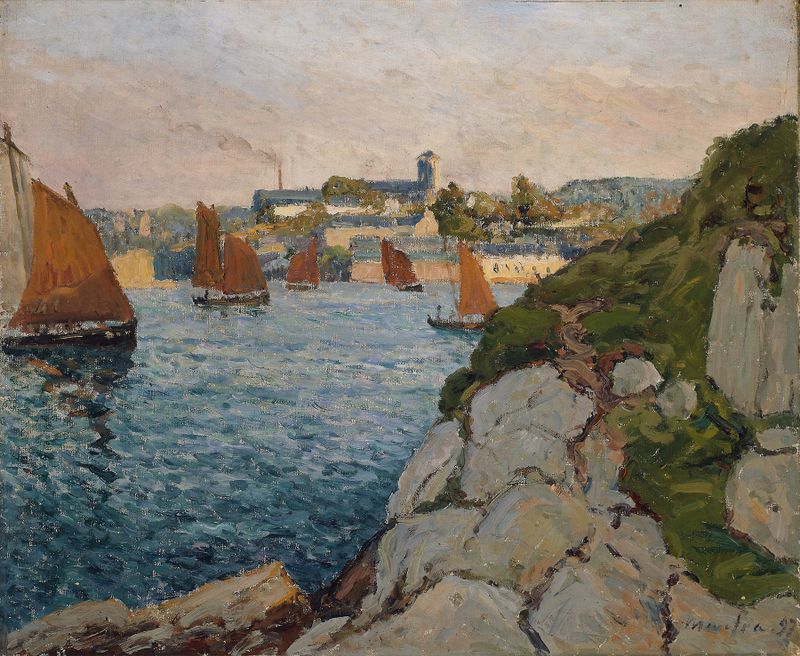
Douarnenez in Sunshine
Maxime Maufra
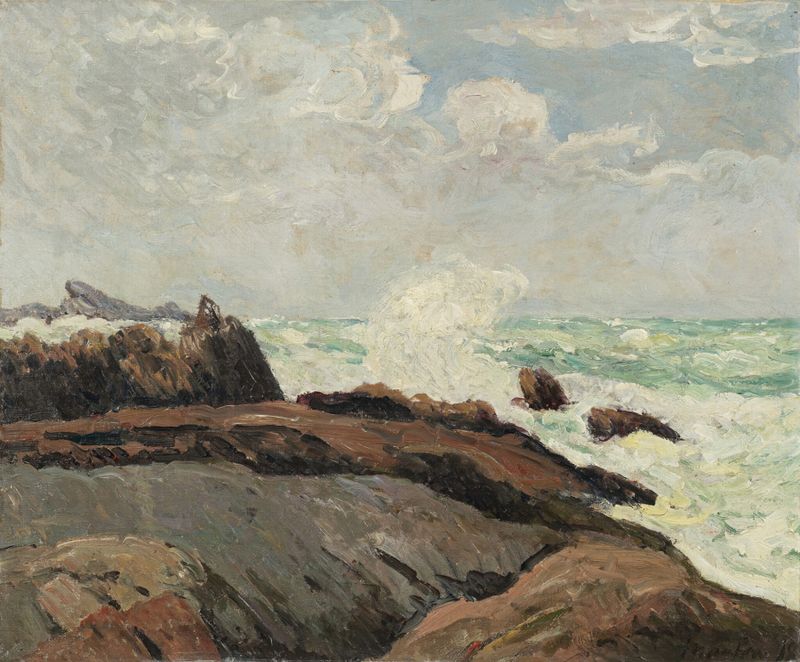
Mer forte à Saint-Guénolé Penmarc’h
Maxime Maufra

Marée Basse À La Plage De Port-Blanc, Presqu’île De Quiberon
Maxime Maufra
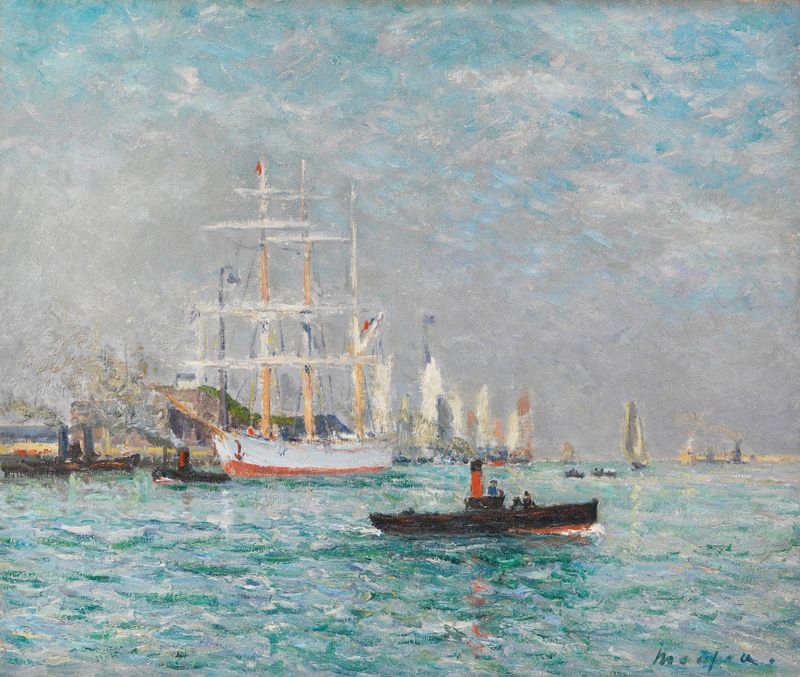
Entré d’un trois-mats, Le Havre
Maxime Maufra

Les rochers du château de Dinan, Morgat, Novembre 1903
Maxime Maufra
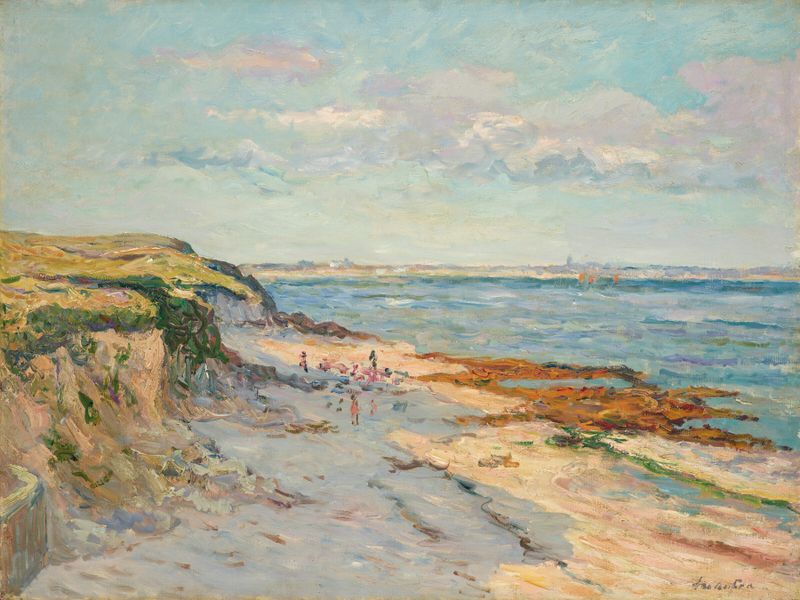
La Plage de Kerhostin, Morbihan
Maxime Maufra
Rochers au soleil couchant
Maxime Maufra
Soir D’orage À Kerhostin
Maxime Maufra





