
Les Rochers à Quessant — History & Facts
Where does light end, and longing begin? In the interplay of sun-kissed hues and shadowed forms, one senses an unspoken dialogue between the earth and sky—a yearning, perhaps, for something just beyond reach. Look to the left at the jagged rocks, their earthy tones infused with vibrant ochres and deep blues. Notice how the light dances across the surfaces, illuminating the contours and creating a shimmering effect that calls to mind the ebb and flow of the tide. The composition is tightly framed, guiding your eye toward the horizon, where sky and sea converge in a delicate embrace, hinting at the vastness beyond the immediate scene.
The brushstrokes are loose yet purposeful, imbuing the canvas with a sense of movement, as if the landscape itself breathes. Delve deeper into the nuances of the painting. The juxtaposition of the rugged rocks against the tranquil sea suggests a tension between stability and fluidity, between permanence and transience. The whispered colors—soft pastels mingling with bold, assertive strokes—evoke a mood of contemplation, inviting the viewer to ponder the relationship between nature and the self.
It’s as though the artist captures a fleeting moment where the beauty of the natural world stirs an inner longing. In 1902, Henry Moret painted this work while living in Brittany, amidst an artistic movement that celebrated the raw beauty of the French coastline. At that time, he was deeply influenced by the Impressionists, who emphasized the effects of light and atmosphere, seeking to convey emotion through color and brushwork. Moret's connection to the landscapes around him informed much of his art, reflecting both his personal experiences and the broader shifts in the art world, where the exploration of light became a central theme.
More Artworks by Henry Moret
Browse all →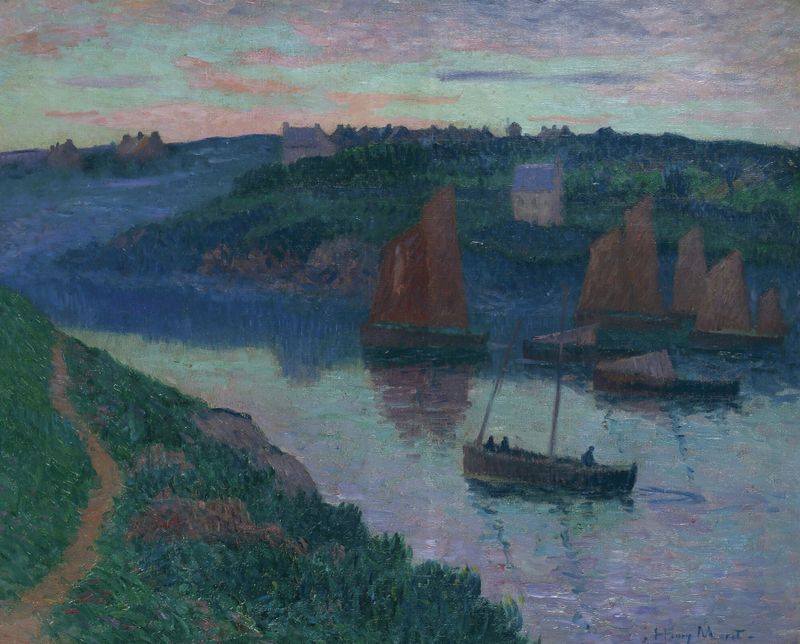
Bateaux De Pêche En Bretagne
Henry Moret
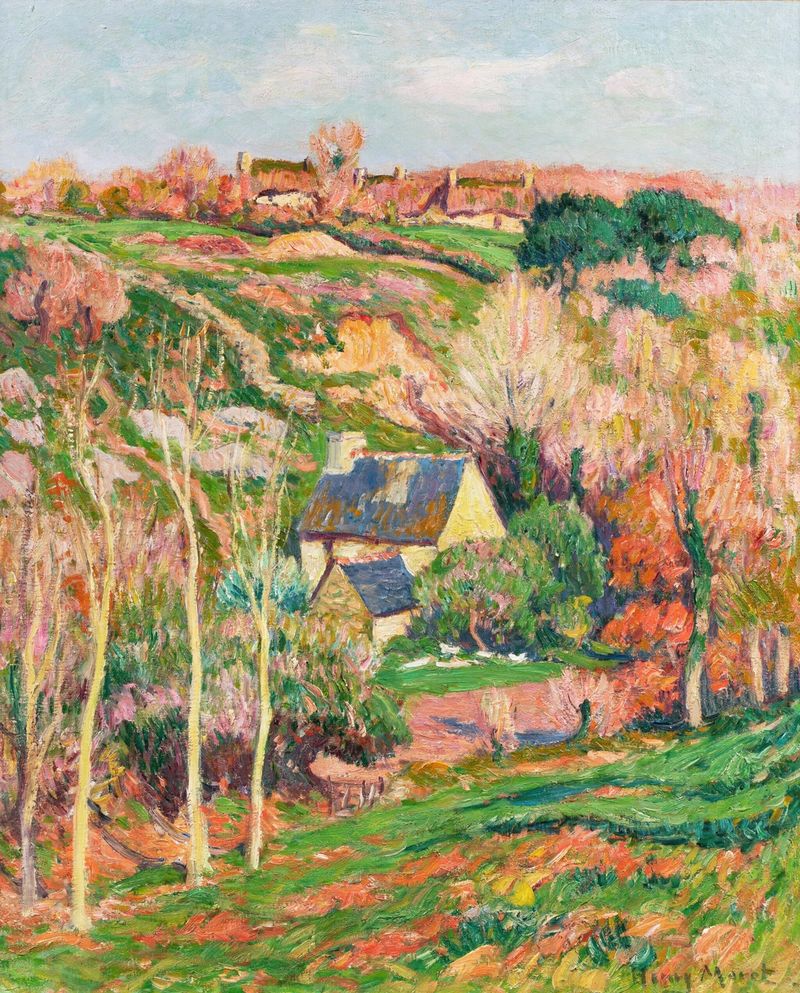
Fermes en Bretagne
Henry Moret
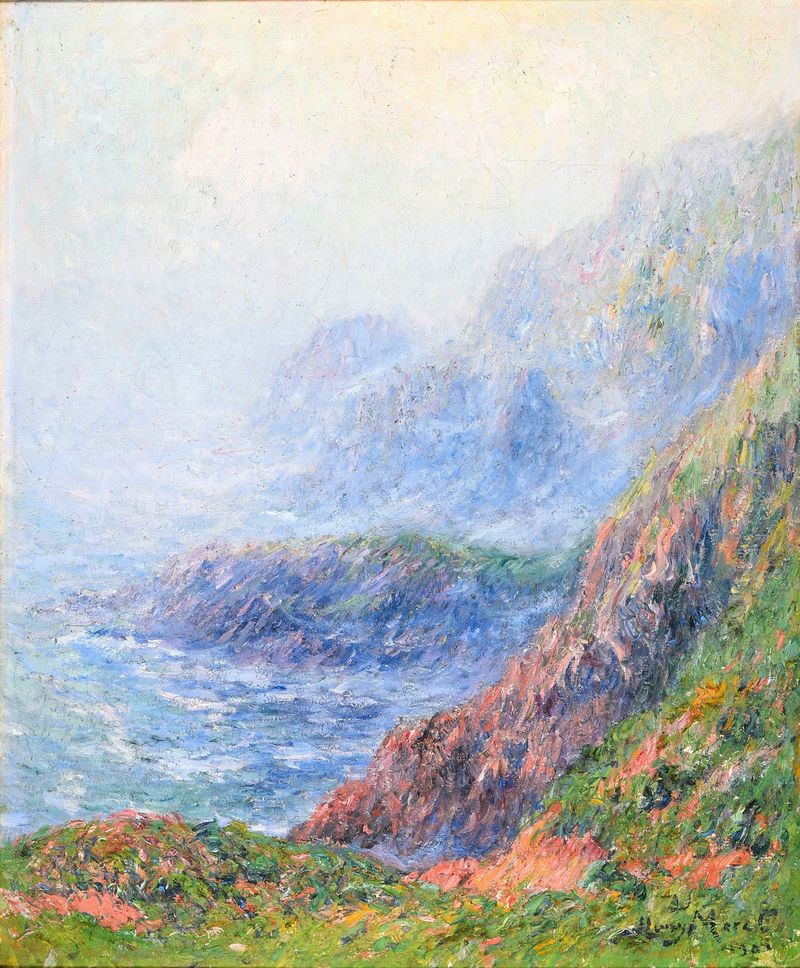
Matinée brumeuse à Ouessant
Henry Moret
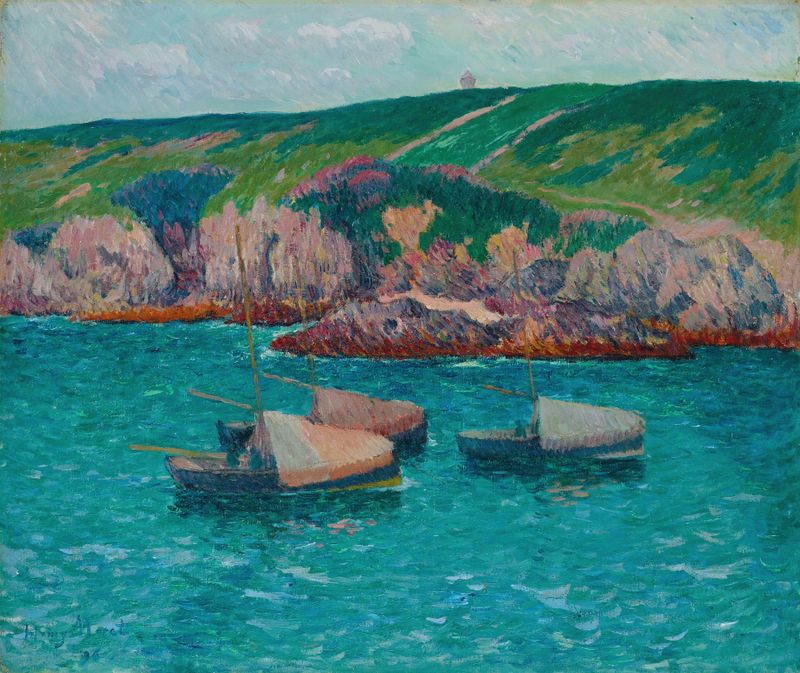
Les Barques à Doëlan
Henry Moret
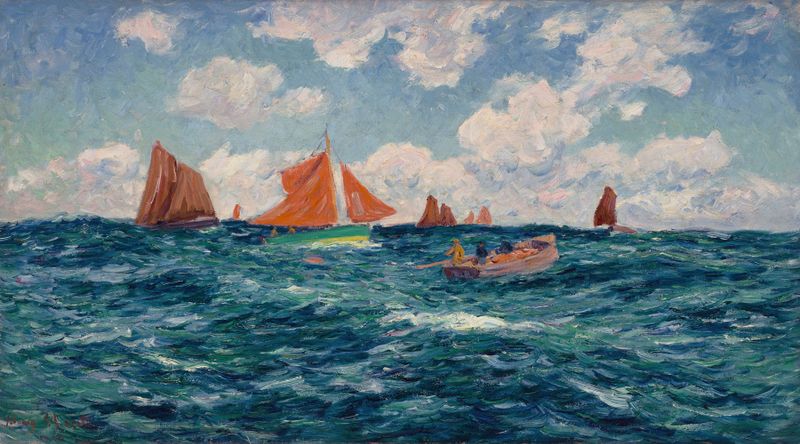
Pêcheurs au large
Henry Moret
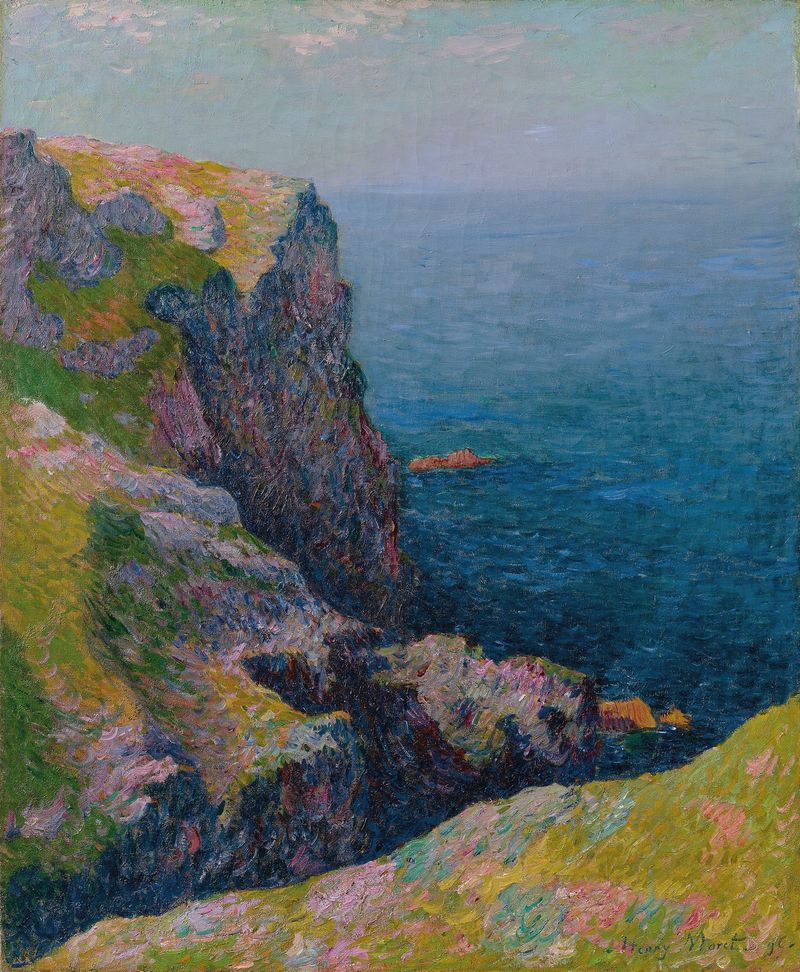
Ile de Groix, Pointe de l’Enfer
Henry Moret
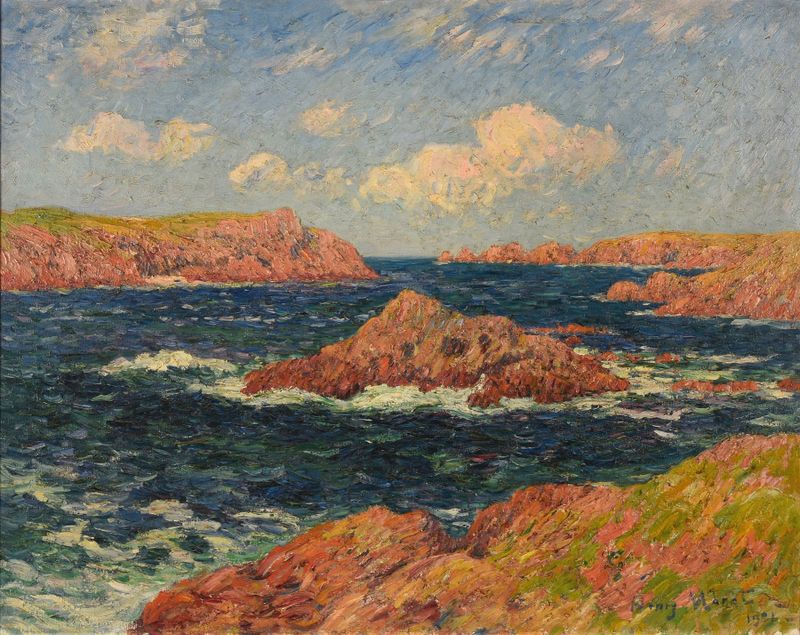
L’Ile de Kerellec (Ouessant)
Henry Moret
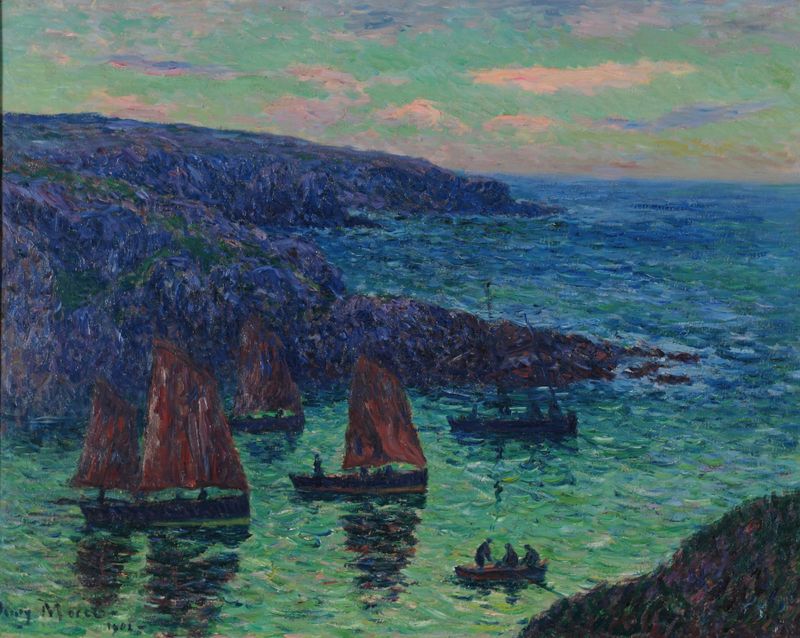
Le soir à Douëlan
Henry Moret
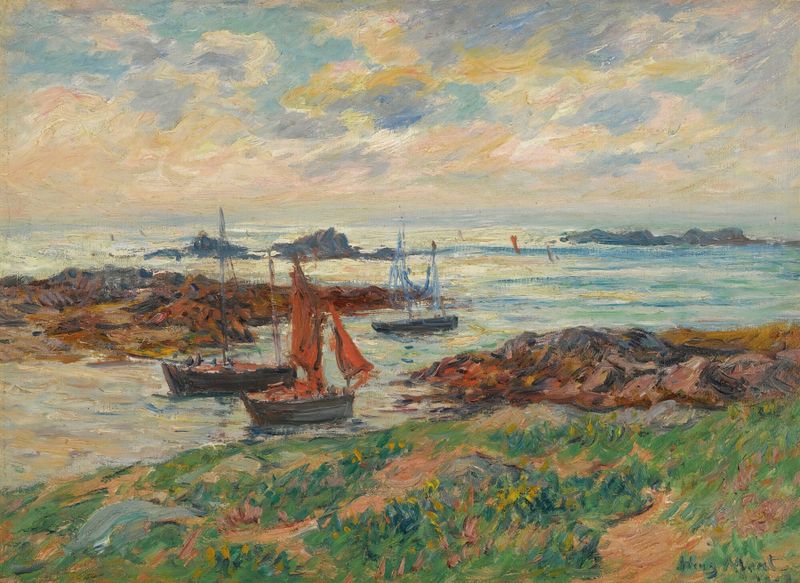
Les Glénans, Finistère
Henry Moret
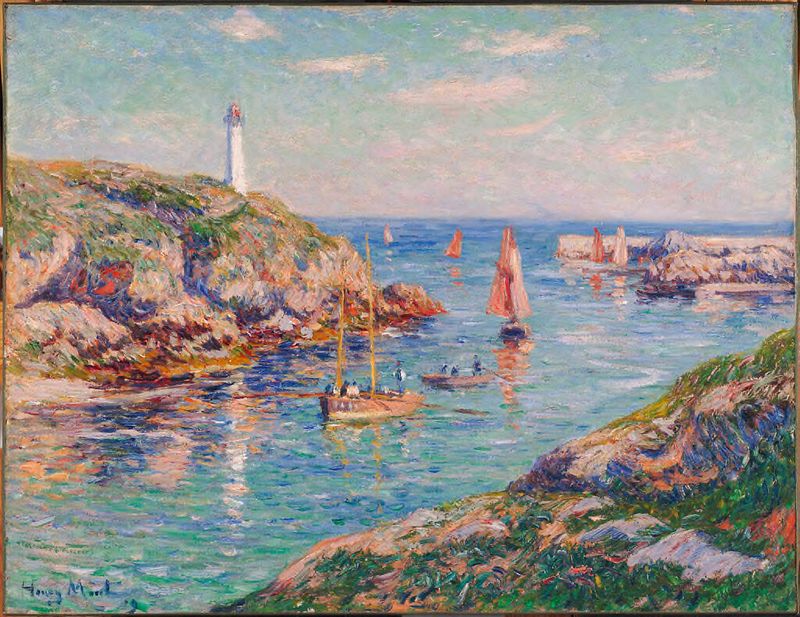
The Port of Douvelan
Henry Moret





