Letzter Schnee — History & Facts
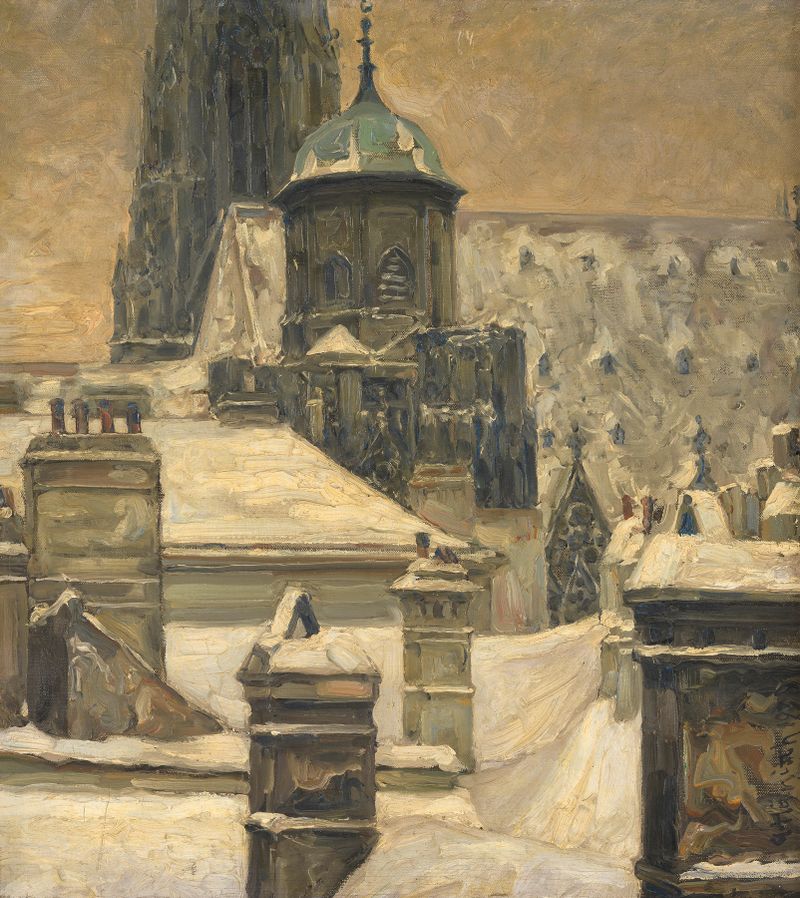
Can beauty exist without sorrow? In Letzter Schnee, the interplay of light and shadow captures the delicate balance between fleeting beauty and the pangs of transience. Look to the upper left, where soft, pale light cascades over the snow-draped landscape, illuminating the gentle contours of a hill. The crisp whites of the snow contrast with the deep, earthy tones that hug the foreground, creating a harmonious yet poignant scene. The artist's brushwork is intentionally loose, suggesting movement and the melting of snow, while the muted colors evoke a sense of quiet reflection.
Each stroke directs your gaze, inviting you to wander through the serene yet restless expanse. Beneath the tranquil surface, an emotional tension simmers. The remnants of winter's chill linger, hinting at the inevitable onset of spring—but also a reminder of the seasonal cycle's bittersweet nature. The juxtaposition of light and shadow serves as a metaphor for life itself, where moments of brightness often come with an underlying sense of loss.
The painting’s quietude invites contemplation on impermanence, making the viewer acutely aware of the beauty that surrounds them even as it begins to fade. In 1909, Alois Hänisch created this work while living in Germany, a time of artistic transition as the country was moving towards modernism. Influenced by the Symbolist movement, he sought to capture profound emotional experiences through landscape, reflecting both the external world and internal states. The early 20th century was a period of intense change, and in Letzter Schnee, Hänisch beautifully encapsulates both the lingering chill of winter and the promise of renewal.