
Libyan chain of mountains, from the Temple of Luxor. — History & Facts
Can paint confess what words never could? In Libyan Chain of Mountains, from the Temple of Luxor, the viewer is invited into a landscape suffused with an unsettling beauty, where the silent majesty of mountains looms over the remnants of an ancient world. Look to the left at the jagged peaks that stretch toward the horizon, their imposing forms painted in deep ochres and shadows that evoke both awe and trepidation. The interplay of light and dark enhances the rugged terrain, while patches of bright sky peek through, creating a stark contrast that captures the viewer’s eye. Each brushstroke reveals not only the physicality of the mountains but also the emotional weight they carry, as if they are silent witnesses to the passage of time. Delve into the subtleties of this work, where hidden meanings lie beneath the surface.
The mountains symbolize the vastness of nature and the insignificance of human endeavors, reflected in the ruins of the Temple of Luxor, a reminder of civilizations that once thrived yet have been rendered powerless against the relentless forces of time. The tension between permanence and decay adds a layer of fear, urging contemplation of our own mortality against the backdrop of eternity. David Roberts created this masterpiece between 1846 and 1849 while traveling through Egypt, a period marked by his growing fascination with the landscapes and antiquities of the region. His work emerged during a time of romantic exploration and discovery, as Western artists sought to capture the exotic allure of distant lands, blending artistic tradition with personal experience.
This painting is a testament to that era, reflecting both the excitement of discovery and the underlying anxiety of a world in flux.
More Artworks by David Roberts
Browse all →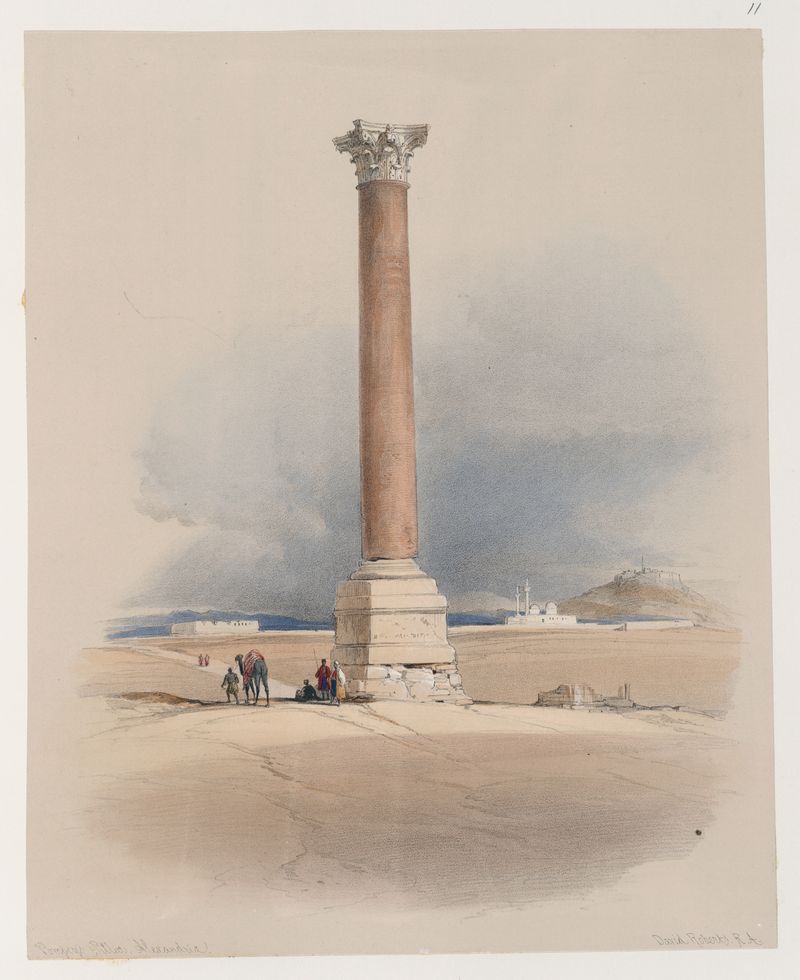
Pompey’s Pillar, Alexandria.
David Roberts

Approach to the Fortress of Ibrim.
David Roberts

Karnac [Karnak]. Nov. 29th, 1838.
David Roberts
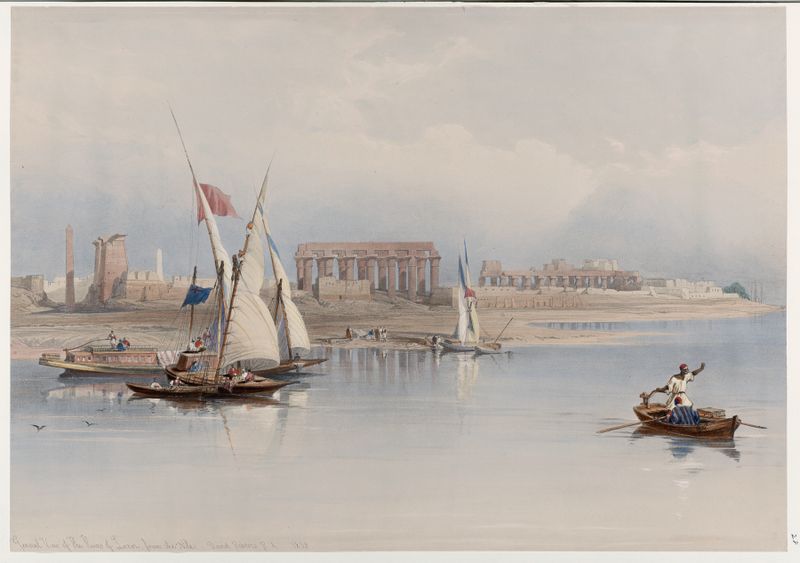
General view of the ruins of Luxor, from the Nile. 1838.
David Roberts

Statues of Memnon at Thebes, during the inundation.
David Roberts

Entrance to the tombs of the kings of Thebes. Bab-el-Malouk [Bîbân al-Mulûk].
David Roberts

The Fortress of the Alhambra, Granada
David Roberts
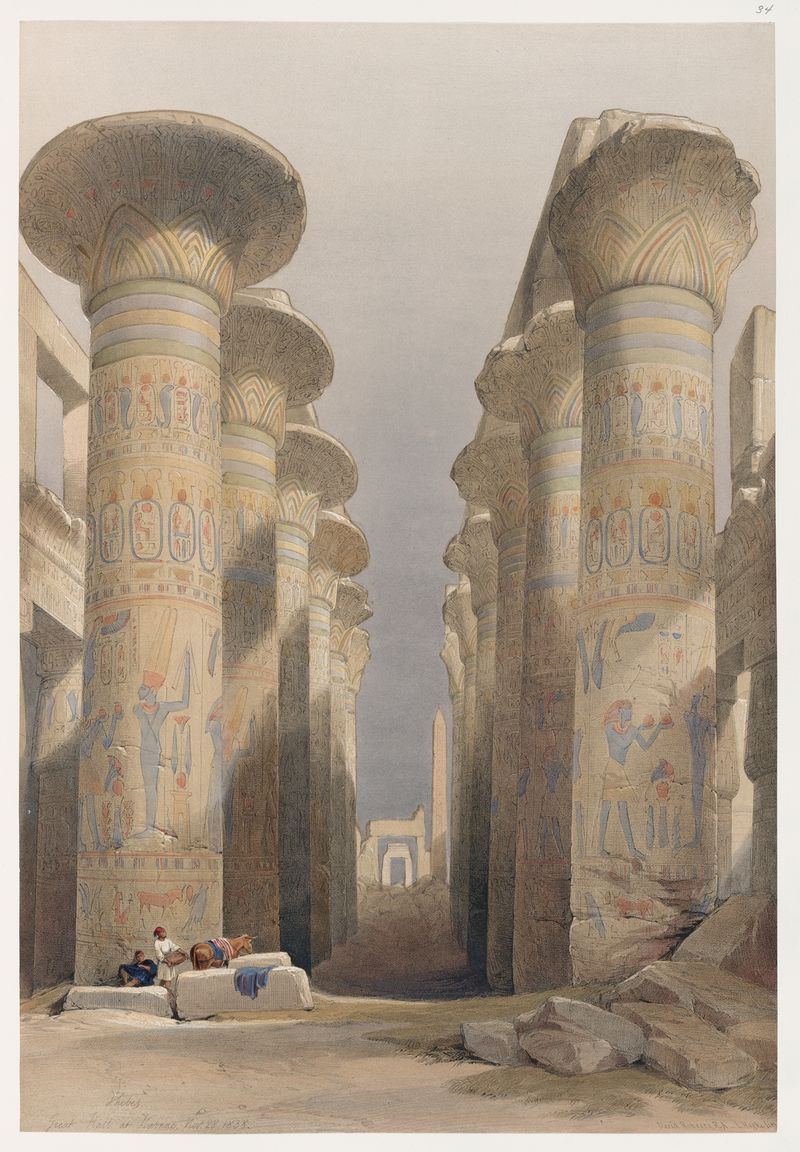
Thebes. Great Hall at Karnak. Nov. 28, 1838.
David Roberts
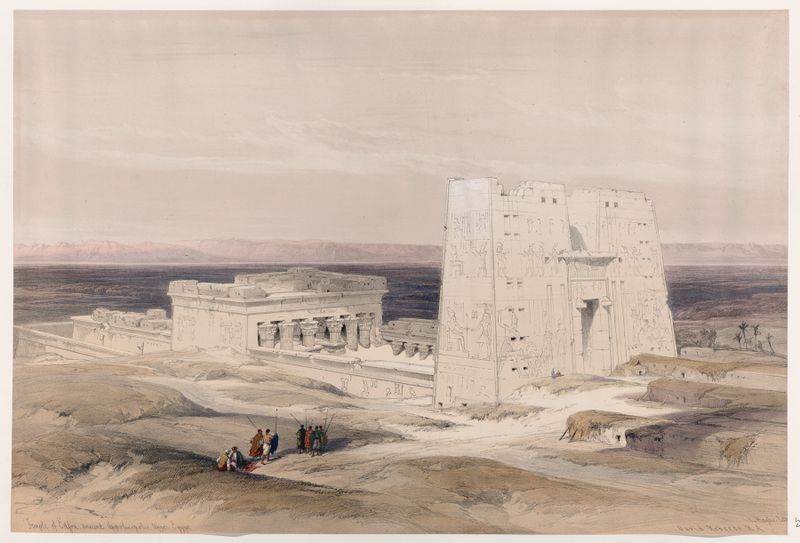
Temple of Edfou [Idfû], ancient Appolinopolis, Upper Egypt.
David Roberts

Temple of Kalabshee [Kalabsha, Kalâbishah], Nubia. Nov. 1838.
David Roberts





