Liddlesdale — History & Facts
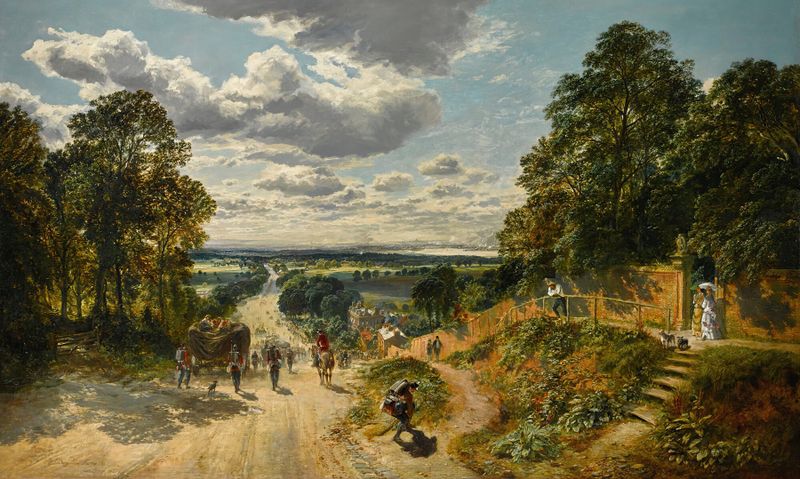
Could beauty survive in a century of chaos? In Liddlesdale, the answer lies in the serene embrace of nature amidst the whispers of decay. Look closely at the verdant hills rising gently to the left, bathed in a soft, golden light as it filters through the clouds. The tranquil river, winding its way through the composition, invites the viewer’s gaze from the foreground to the distant horizon, where the peaks stand resolute against the encroaching storm. Bough's delicate brushwork captures the dance of light on water, while the muted greens and browns evoke a sense of harmony tinged with melancholy, suggesting both life and inevitable decline. As you observe the painting, nuances emerge, revealing the tension between vibrancy and decay.
The lush foliage reflects the vitality of the landscape, yet the darker, shadowy areas hint at the inevitability of deterioration, a poignant reminder of nature's cyclical essence. The juxtaposition of the bright sky and the darkened valley contributes a sense of foreboding, as if the land itself holds its breath, caught in the balance between flourishing and fading. In 1866, Samuel Bough painted Liddlesdale during a period marked by rapid industrialization in Britain, which often overshadowed the natural beauty of the countryside. As he navigated his personal struggles with health and financial instability, he found solace in portraying the landscapes of his homeland.
This work reflects not only his artistic vision but also an era grappling with the tension between progress and preservation.