Liggende koe, van achteren gezien — History & Facts
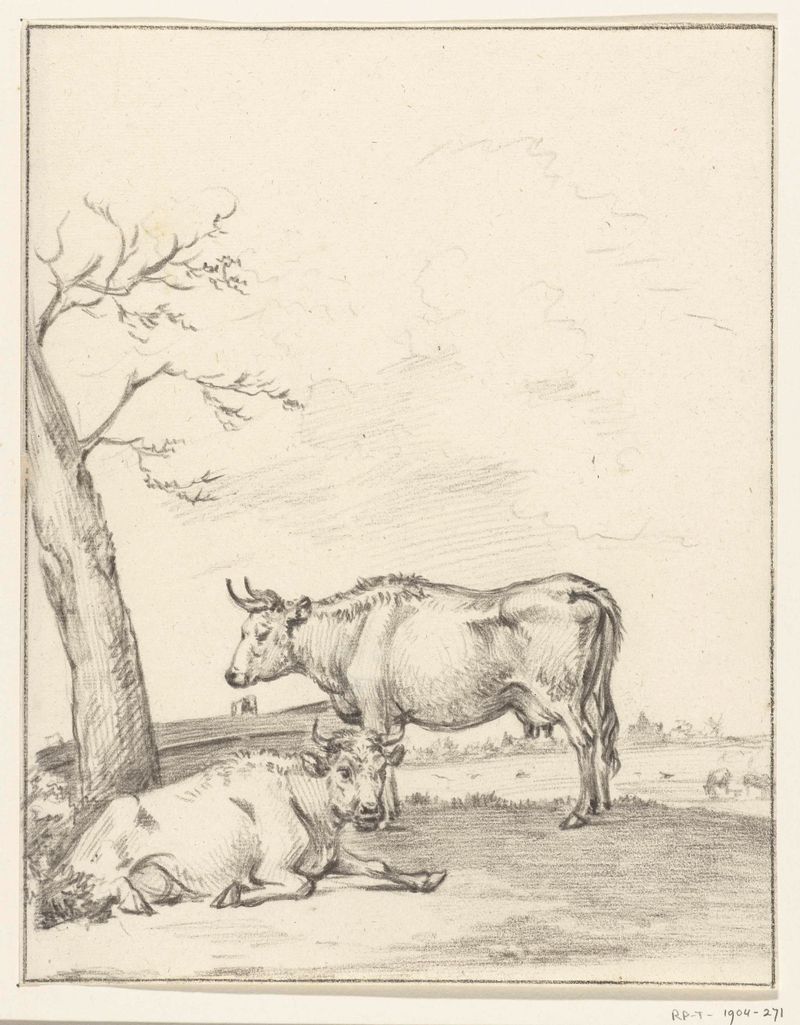
What if silence could speak through light? The stillness in Liggende koe, van achteren gezien envelops the viewer, hinting at a profound loneliness that resonates within the composition. Look to the left at the gentle curve of the cow's back, its body draped like a heavy cloak against the earthy canvas. The muted browns and ochres blend seamlessly, inviting you to trace the soft contours of the animal's form. Notice how the light filters softly across its surface, casting delicate shadows that breathe life into the stillness.
It feels as if time stands still, encapsulated in this solitary moment, revealing the artist's mastery in portraying the essence of tranquility. Beneath this serene exterior lies a deeper tension — the contrast between the living creature and the expanse surrounding it speaks volumes of isolation. The absence of any human presence amplifies the cow's solitude, suggesting a poignant reflection on existence itself. The simplicity of the composition belies the weight of the themes at play, where the silence of the scene becomes a vessel for contemplation and introspection. Jean Bernard created this work around 1815, during a period of significant transformation in the art world.
Living in France amidst the post-Napoleonic era, he was influenced by the Romantic movement's emphasis on emotion and individual experience. As he painted, societal shifts were reshaping landscapes and lives, imbuing his art with a quiet yet powerful commentary on both the natural world and the solitude experienced within it.