Liminganjoki River — History & Facts
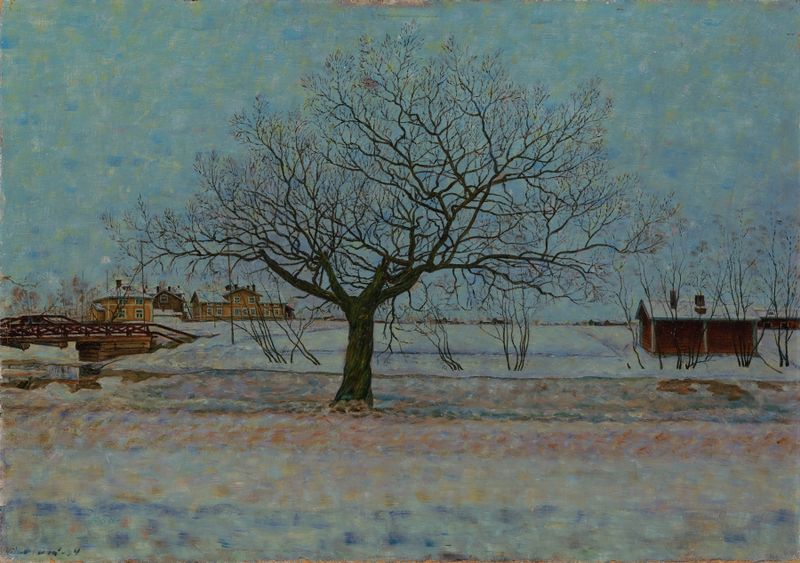
Where does light end, and longing begin? This question echoes through the reflective waters of Liminganjoki River, inviting us to delve into the depths of its serene beauty. Look closely at the lower half of the canvas, where the river mirrors a soft pastel sky. The gentle curves of the water create an ethereal surface, capturing the interplay between light and shadow. Notice how the artist employs delicate brushstrokes, blending hues of blue and gold, allowing the viewer's gaze to drift along the winding path of the river.
A quiet harmony exists here, framed by the lush greens of the riverbanks, grounding the scene in nature's embrace. Yet, beneath this tranquil surface lies a profound juxtaposition between tranquility and isolation. The sparse trees stand sentinel along the shore, their limbs reaching out like silent witnesses to the passage of time. The stillness of the water reflects not only the sky but also an unspoken yearning, as if the river itself is a conduit for untold stories and memories.
This duality evokes a sense of nostalgia, as if each ripple cradles fragments of the past, inviting contemplation. In 1934, amidst the rising tension of a changing Europe, the artist created this work in Finland, where the natural landscape served as both muse and refuge. Lamplight’s exploration of rural life and its inherent beauty coincided with a period of profound personal reflection, grappling with his identity as an artist. At a time when the world seemed poised on the edge of turmoil, this piece emerges as a testament to resilience and the enduring power of nature’s quietude.