
Lindisfarne Priory, Northumberland — History & Facts
Can beauty exist without sorrow? In Lindisfarne Priory, the echoes of loss resonate through the crumbling stones, inviting contemplation on the interplay between grandeur and decay. Look to the center, where the majestic ruins rise against a somber sky, their intricate details hinting at a once-vibrant life. Notice how the muted palette of browns and grays envelops the structure, while the occasional burst of light illuminates the archways, suggesting a fleeting connection to the past. The careful composition directs your gaze upward, toward the remaining spires, which stand as solemn sentinels of history, embodying the fragility of time. Within this artwork lies a profound tension between memory and oblivion.
The remnants of the priory symbolize both a sacred past and an inevitable decline, representing the dualities of faith and abandonment. Each weathered stone tells a story of devotion and loss, inviting viewers to ponder the passage of time and the impermanence of beauty. The distant horizon, shrouded in mist, further amplifies this sense of longing and nostalgia, merging the physical realm with the ethereal. David Roberts painted this evocative scene in 1846, during a period marked by the Romantic movement’s fascination with the sublime and the picturesque.
At this time, he traveled extensively across Britain, capturing landscapes infused with historical significance. The ruins of Lindisfarne, a site steeped in spiritual heritage, served as both a backdrop and a muse, reflecting his deep interest in the themes of history, identity, and the haunting beauty of decay.
More Artworks by David Roberts
Browse all →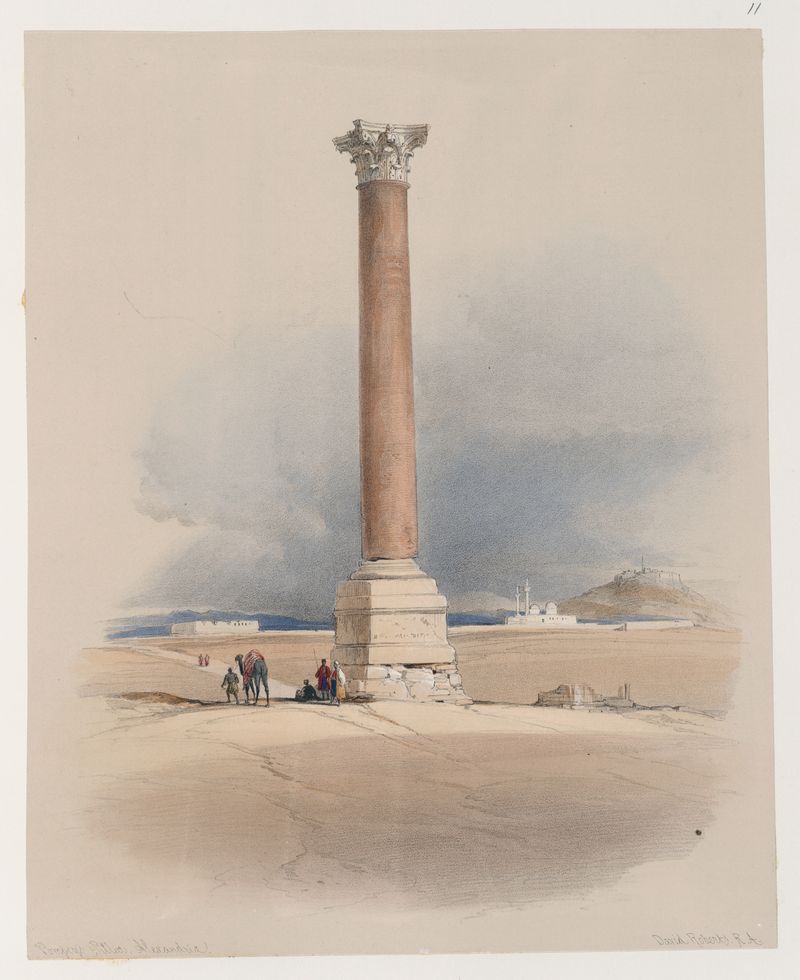
Pompey’s Pillar, Alexandria.
David Roberts

Approach to the Fortress of Ibrim.
David Roberts

Karnac [Karnak]. Nov. 29th, 1838.
David Roberts
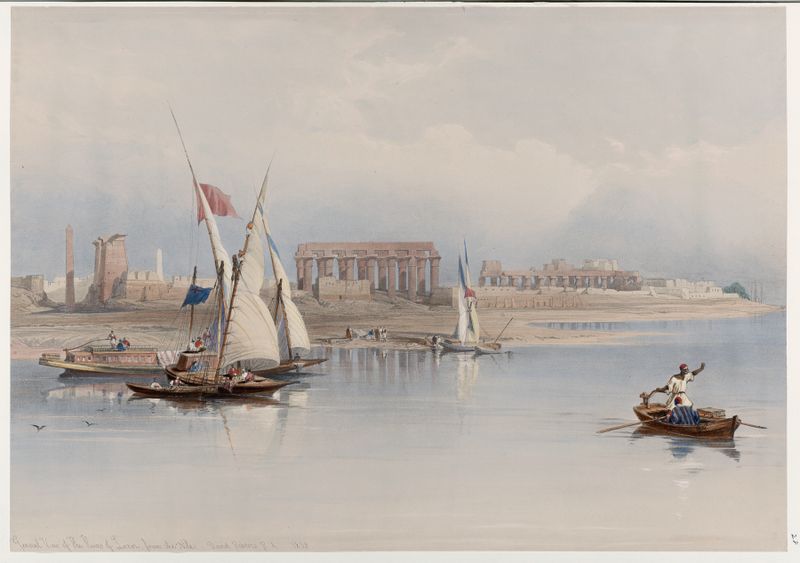
General view of the ruins of Luxor, from the Nile. 1838.
David Roberts

Statues of Memnon at Thebes, during the inundation.
David Roberts

Entrance to the tombs of the kings of Thebes. Bab-el-Malouk [Bîbân al-Mulûk].
David Roberts

The Fortress of the Alhambra, Granada
David Roberts
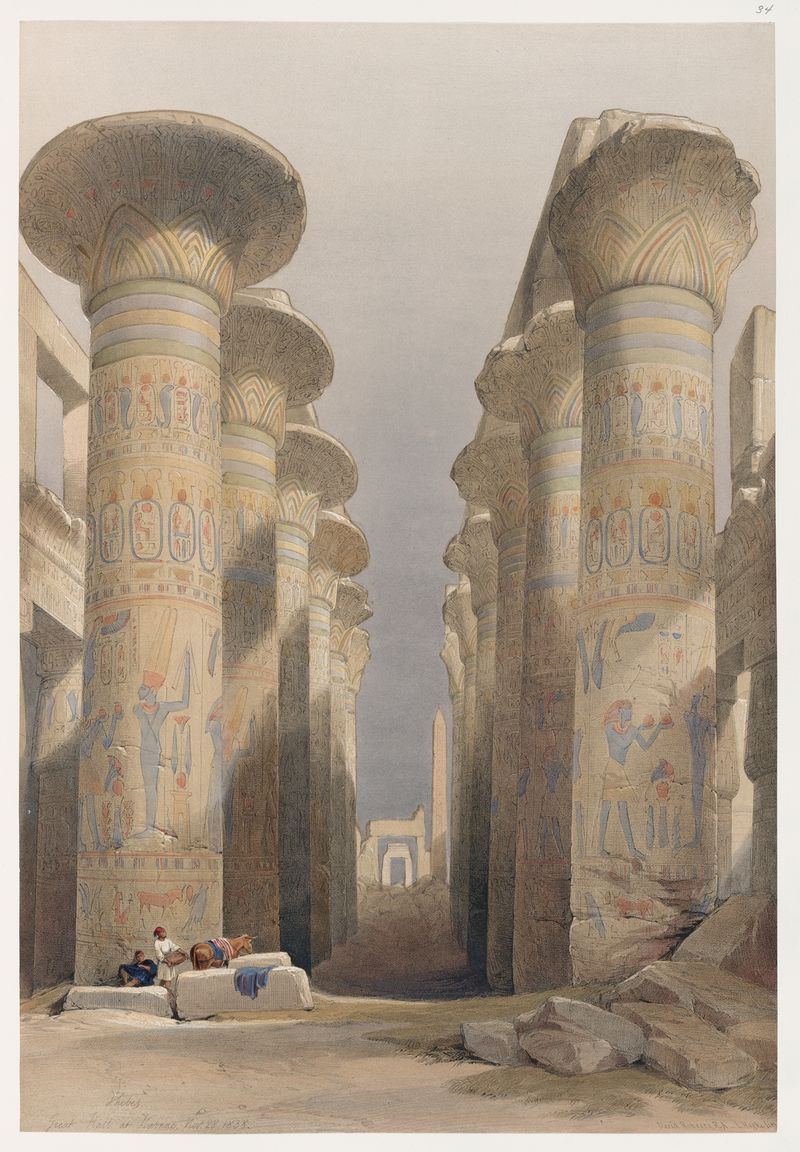
Thebes. Great Hall at Karnak. Nov. 28, 1838.
David Roberts
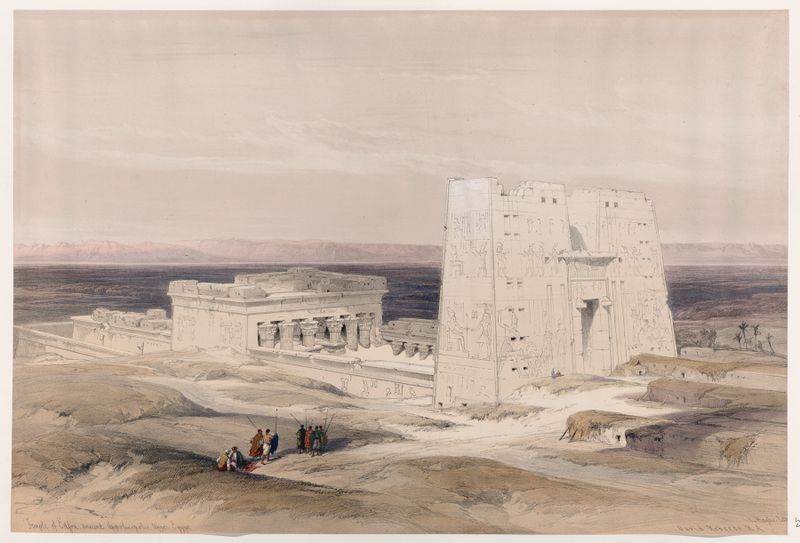
Temple of Edfou [Idfû], ancient Appolinopolis, Upper Egypt.
David Roberts

Temple of Kalabshee [Kalabsha, Kalâbishah], Nubia. Nov. 1838.
David Roberts
More Architecture Art
Browse all →
The statue of Liberty
Frédéric Auguste Bartholdi

View of Houses in Delft, Known as ‘The Little Street’
Johannes Vermeer

View of Houses in Delft, Known as ‘The Little Street’
Johannes Vermeer

The Cathedral in Rouen. The portal, Grey Weather
Claude Monet

The yellow house
Vincent van Gogh

The Church in Auvers-sur-Oise, View from the Chevet
Vincent van Gogh