Loch in the Highlands — History & Facts
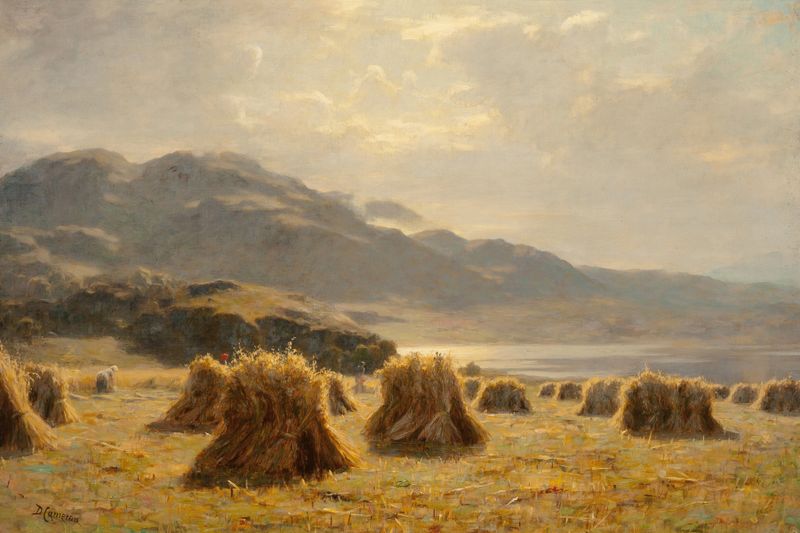
What if silence could speak through light? In Loch in the Highlands, the quiet majesty of Scotland's landscapes invites contemplation, leaving viewers awestruck by nature's stillness. Look to the foreground where a gentle ripple disturbs the glassy surface of the loch, mirroring the vibrant hues of the surrounding hills. The composition is carefully balanced, leading the eye into the depths of the scene. Notice how the artist employs a soft palette of greens and blues, interspersed with warm earthy tones, to create a harmonious blend that reflects both tranquility and depth.
The light cascades from an unseen source, illuminating the grasses at the water's edge, enhancing the ethereal quality of the moment captured on canvas. Within the serene landscape lies an emotional tension between solitude and serenity. The expansive sky looms overhead, filled with billowy clouds that hint at impending change, while the stillness of the loch suggests a moment suspended in time. This juxtaposition evokes a sense of awe, as the viewer feels both the isolation of the vast space and the intimate connection to nature's beauty.
Each brushstroke seems to whisper secrets of the highlands, revealing a world both grand and close. Duncan Cameron painted this work during a period of burgeoning Romanticism, likely in the late 19th century, a time when artists sought to capture nature's sublime beauty amidst growing industrialization. His focus on the Scottish landscape reflects both a personal attachment to his homeland and a broader artistic movement that revered the emotional power of the natural world. During this period, Cameron emerged as a significant figure, exploring the sublime in his works while contributing to the dialogue on the importance of landscape in art.