Lookout Rock, Yosemite Valley — History & Facts
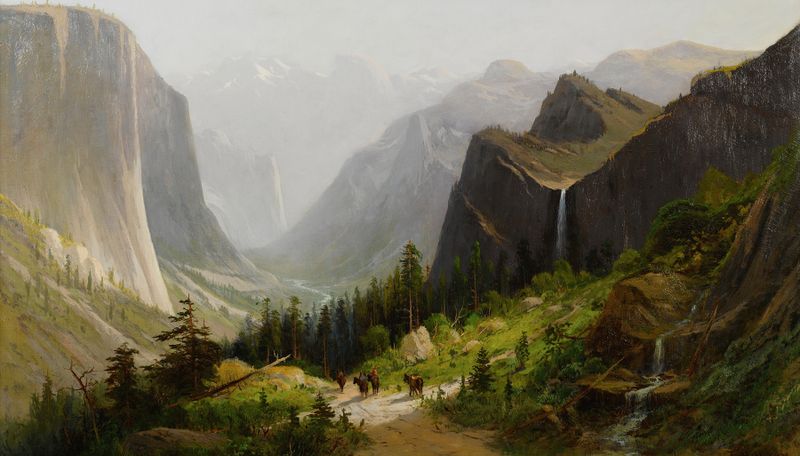
Can beauty exist without sorrow? In Frederick Ferdinand Schafer's vision, landscapes whisper tales of rebirth that echo through the ages. Look closely at the sweeping vista that unfolds across the canvas. The viewer's gaze is drawn to the majestic peaks that rise like ancient sentinels. Notice how the sunlight bathes the granite cliffs, casting sharp contrasts between light and shadow, evoking a sense of profound grandeur.
The gentle curves of the valleys below invite the eye to wander, while the delicate brushwork captures both the ruggedness of nature and the serene stillness of a moment frozen in time. As you delve deeper into the composition, consider the interplay of elements that speaks to a rich narrative. The vibrant greens of the meadows symbolize life and renewal, while the towering rocks above stand as a reminder of the challenges and trials inherent in existence. This tension between the serene beauty of the foreground and the imposing nature of the cliffs suggests a cycle of hardship and regeneration, as if the very essence of the landscape embodies the resilience of life itself. During this period, the artist was immersed in the evocative beauty of Yosemite, a time when America was beginning to embrace its national parks.
Though the exact date of creation remains uncertain, Schafer's work reflects a growing appreciation for the natural world and the ideals of the American Romantic movement, where artists sought to capture the sublime essence of untouched landscapes.