Looting — History & Facts
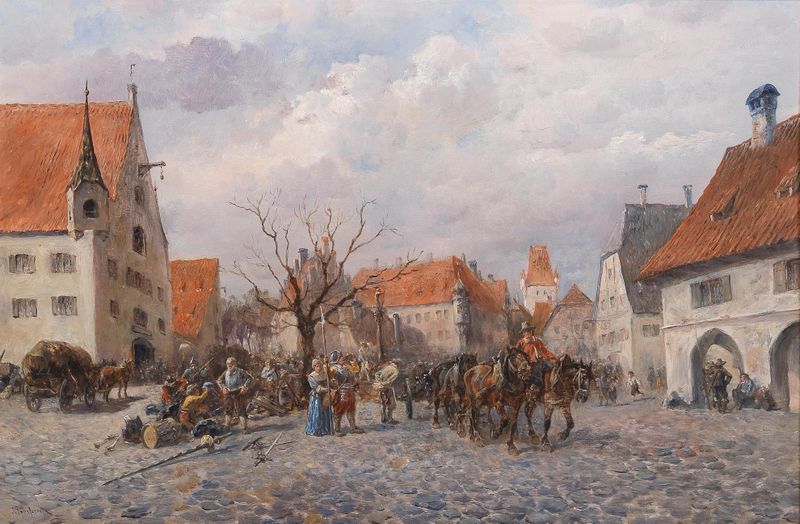
Is this a mirror — or a memory? In Looting, the artist creates a haunting reflection on loneliness that resonates beyond the canvas, inviting viewers to confront their own fragmented experiences. Look to the left at the solitary figure, draped in tattered garments. The muted colors of gray and blue envelop the subject, emphasizing a profound isolation amidst the chaos suggested by the surrounding disarray. Notice how the jagged edges of broken objects spill into the foreground, their chaotic arrangement contrasting sharply with the quiet posture of the figure.
This interplay of light and shadow heightens the emotional weight of the scene, each stroke a testament to despair and vulnerability. Delve deeper into the work and you’ll find layers of meaning woven through its texture. The stark contrast between the desolation of the background and the stillness of the figure suggests a battle between inner turmoil and external chaos. The shattered remnants scattered around serve as a metaphor for lost connections, evoking a sense of nostalgia and longing.
Each piece of debris is a fragment of a story, a life interrupted, leaving the viewer to ponder what has been lost to time. Created during a period marked by upheaval and change, the artist crafted this piece amidst a world grappling with the aftermath of conflict. The emotional resonance of this work reflects Friedländer’s personal struggles and the broader disillusionment felt in the realms of art and society. It serves as a poignant reminder of the enduring effects of war on humanity, a reflection that still echoes today.