
Los creyentes — History & Facts
In the quietude of painted reflection lies the essence of belief—a delicate balance suspended in time. Look to the center of the canvas, where the figures stand, draped in soft hues that echo their introspective nature. The muted palette draws you in, with gentle blues and earthy tones weaving together, inviting contemplation. Notice the way light caresses their faces, illuminating the depth of their expressions, yet leaving parts shrouded in shadow.
Each brushstroke seems deliberate, guiding the viewer’s eye from one figure to another, capturing the stillness of their united purpose. Delve deeper into the details: the way one figure clutches a prayer book while another gazes upward, seemingly addressing an unseen divinity. This juxtaposition of action and stillness conveys a profound emotional tension, suggesting a yearning for connection that transcends the physical realm. The background, almost abstract in nature, enhances their focus, reinforcing the idea that faith is often a solitary journey amidst a chaotic world.
The composition conveys a narrative of spirituality, inviting the viewer to reflect on their own beliefs. Created in 1888 in Milan, this piece emerged during a time of artistic transition as Carcano navigated the influences of both realism and symbolism. The late 19th century saw a growing interest in exploring inner experience and emotional depth in art, mirroring societal shifts towards individualism and introspection. In this context, Los creyentes stands as a poignant exploration of faith, capturing a moment in time that resonates with universal truths.
More Artworks by Filippo Carcano
Browse all →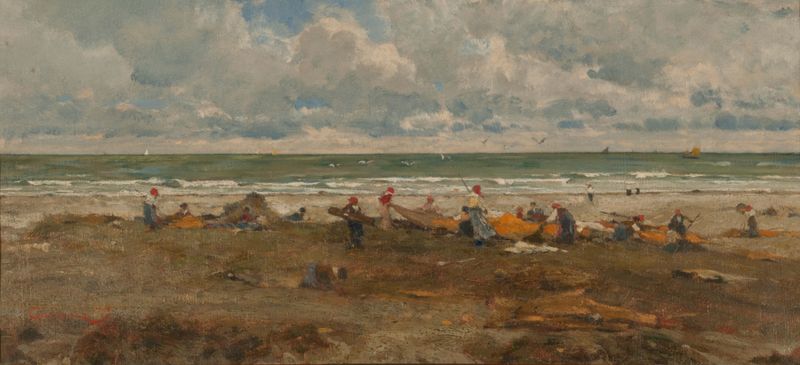

More Religious Art
Browse all →
The Return of the Prodigal Son
Rembrandt van Rijn

The Garden of Earthly Delights
El Bosco

Count Orgaz’ funeral
El Greco

The Hundred Guilder Print: the central piece with Christ preaching, the plate arched
Rembrandt van Rijn

The Descent from the Cross
Rogier van der Weyden

The return of the prodigal son
Rembrandt van Rijn