Nel Bosco — History & Facts
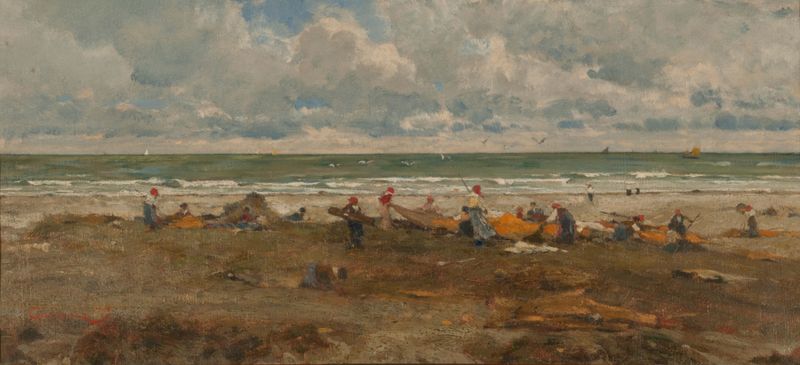
In a world where truths can fade like whispers in the wind, art remains a testament to what truly matters. Look closely at the intricate interplay of light and shadow in Nel Bosco. The verdant greens of the forest seem to pulse with life, drawing your eyes toward the dappled sunlight breaking through the dense canopy. The deft strokes create a sense of movement, urging you to breathe in the cool, earthy air and feel the leaves rustle gently.
Notice how the trees stand tall, their trunks textured with an almost tangible depth, as if inviting you into their ancient embrace. Beneath the surface, the painting reveals a narrative of resilience. The interplay of dark and light reflects the duality of existence — moments of clarity juxtaposed with layers of obscured truths. Each brushstroke is a reminder of nature’s unyielding spirit, while the muted tones harmonize with a sense of introspection, evoking a longing for connection to both the earth and oneself.
Such contrasts are not merely aesthetic but resonate with deeper emotional currents, stirring contemplation on the passage of time and memory. During the late 19th century, when Nel Bosco was created, Carcano was deeply entrenched in the Italian art scene, embracing the natural world as a source of inspiration. This period was marked by a growing interest in realism, as artists sought to depict life with authenticity. Carcano, influenced by both Impressionism and the rich landscapes of his homeland, captured this essence in his work, reflecting a desire to anchor fleeting moments of beauty in a rapidly changing society.