Ludgate, Evening — History & Facts
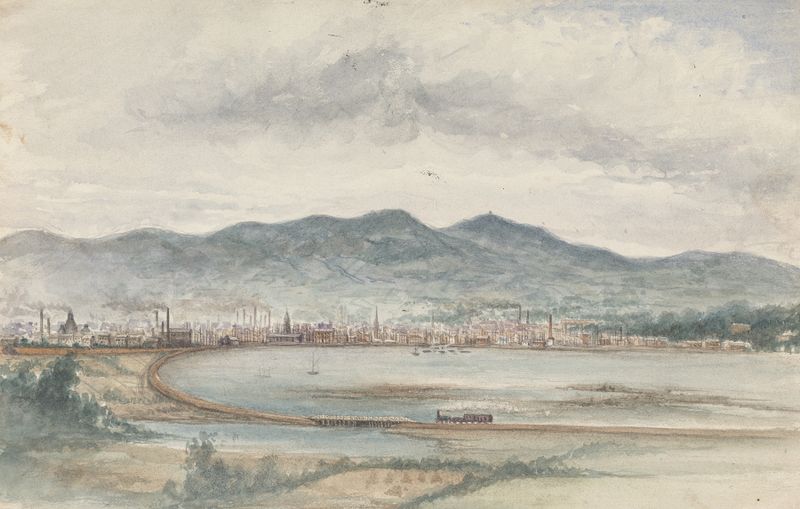
In the twilight of day, shadows stretch and deep breathe, awakening the essence of a moment cloaked in stillness and reflection. The atmosphere vibrates with unspoken thoughts, as if the world pauses to listen to the whispers of the night. Look to the horizon where a deepening blue sky meets the silhouettes of buildings. The radiant glow of the setting sun softly kisses the rooftops, enveloping them in a warm, golden hue.
Notice how the light dances across the cobblestones, revealing a hidden path that beckons one to explore the forgotten corners of Ludgate. The artist’s deft brushwork captures the interplay of light and shadow, inviting the viewer to step into this serene evening, caught between the bustle of the day and the quietude of night. Amidst the gentle hues lies a tension — the juxtaposition of urban life against the tranquility of twilight. The architecture, strong and unyielding, stands resolute, yet the cooling shadows speak of a softer truth, perhaps the yearnings of those who traverse these streets.
Each building seems to harbor secrets and dreams, while the light, tender and fleeting, evokes a sense of nostalgia for moments lost and yet to come. In 1887, John O'Connor was painting in London, a city alive with industrial transformation and artistic exploration. This period marked a turn in the art world, where many were seeking to capture the ephemeral beauty of the everyday. O'Connor, influenced by the Impressionists, embraced this new sensitivity, channeling both the vibrancy and solitude of urban life, creating works that resonate with the very pulse of existence.