
Luxor. Dec. 1st, 1838. — History & Facts
In the stillness of ancient landscapes, echoes of rebirth reverberate through the ages, waiting to be unearthed. Look to the left at the majestic temple, its towering columns reaching skyward, hints of sunlight illuminating the intricate carvings that tell stories long forgotten. Notice the warm hues of ochre and gold, contrasting with deep shadows that nestle within the stone, each detail meticulously rendered, inviting viewers to explore the depth of history. The composition draws the eye along the gentle curve of the Nile, guiding one’s gaze through a world both timeless and transient, as the past breathes life into the present. Among the subtle contrasts, the interplay of light and shadow is profound, hinting at the dualities of creation and decay inherent in all things.
The vibrant landscape, unmarred by modernity, embodies the possibilities of rebirth while the ruins remind us of the impermanence of human achievement. Each figure, whether a solitary traveler or a distant observer, becomes part of a narrative that reflects the coexistence of exploration and reverence for ages past. David Roberts created this artwork between 1846 and 1849 during his travels through Egypt, a time when the Western world was enthralled with the mysteries of the East. This period marked a significant moment in European art, as artists began to incorporate exotic locales into their works, showcasing the seduction of the Orient.
Amid the political and technological changes of the time, Roberts' meticulous depictions offered viewers a glimpse into a distant yet alluring world, simultaneously capturing the essence of exploration and a longing for rebirth.
More Artworks by David Roberts
Browse all →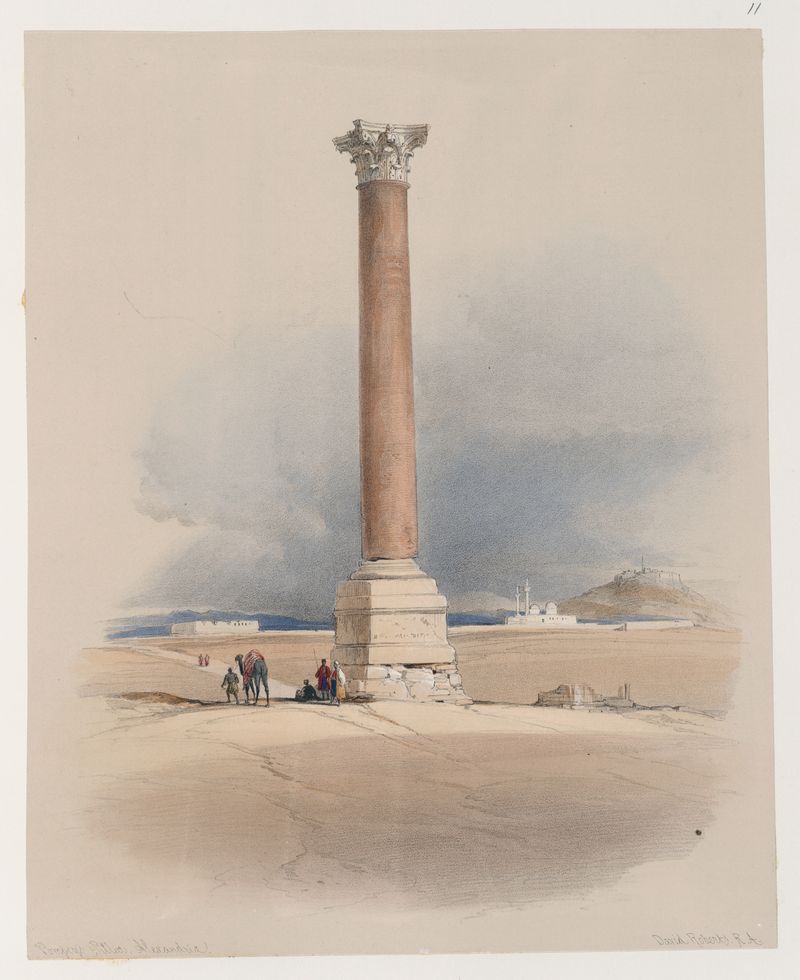
Pompey’s Pillar, Alexandria.
David Roberts

Approach to the Fortress of Ibrim.
David Roberts

Karnac [Karnak]. Nov. 29th, 1838.
David Roberts
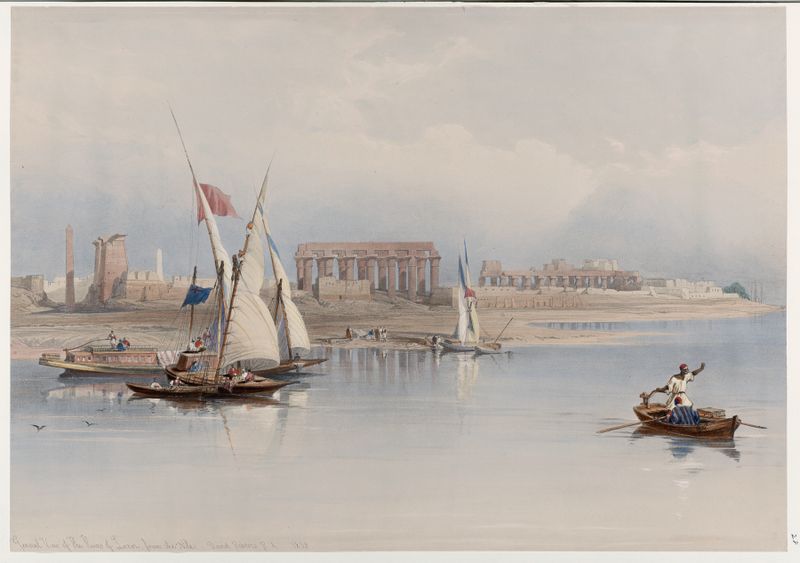
General view of the ruins of Luxor, from the Nile. 1838.
David Roberts

Statues of Memnon at Thebes, during the inundation.
David Roberts

Entrance to the tombs of the kings of Thebes. Bab-el-Malouk [Bîbân al-Mulûk].
David Roberts

The Fortress of the Alhambra, Granada
David Roberts
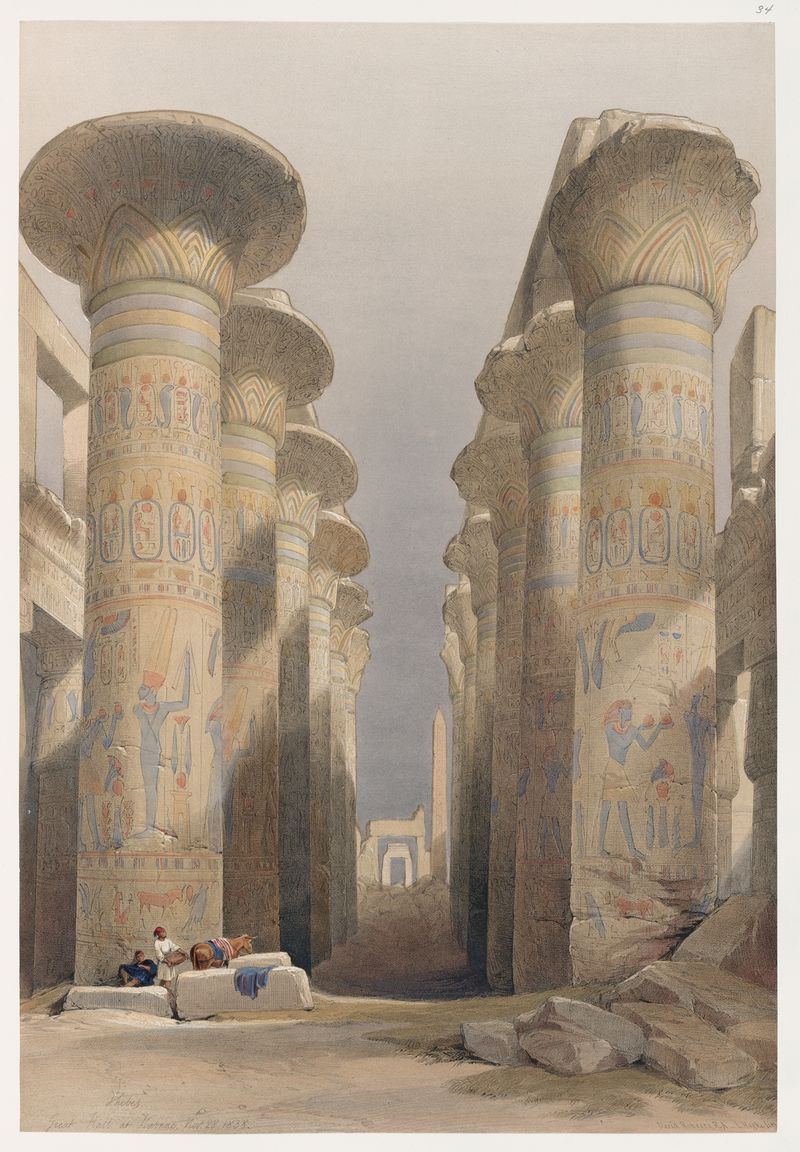
Thebes. Great Hall at Karnak. Nov. 28, 1838.
David Roberts
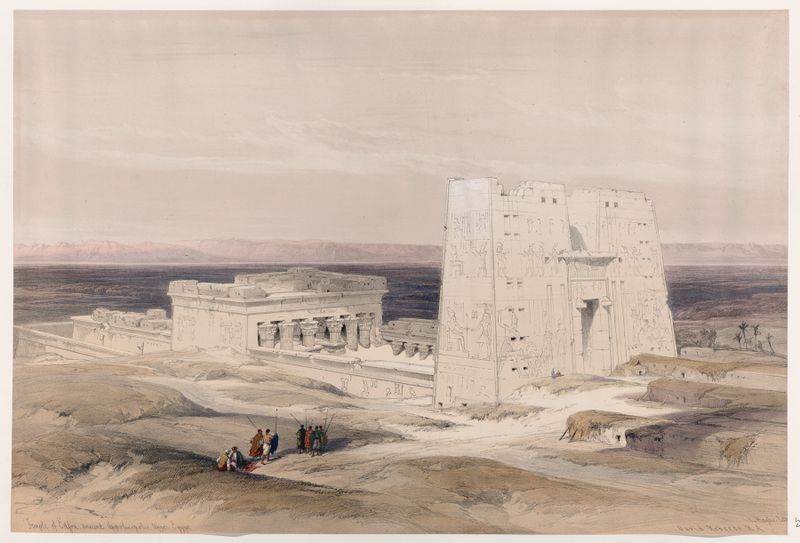
Temple of Edfou [Idfû], ancient Appolinopolis, Upper Egypt.
David Roberts

Temple of Kalabshee [Kalabsha, Kalâbishah], Nubia. Nov. 1838.
David Roberts
More Architecture Art
Browse all →
The statue of Liberty
Frédéric Auguste Bartholdi

View of Houses in Delft, Known as ‘The Little Street’
Johannes Vermeer

View of Houses in Delft, Known as ‘The Little Street’
Johannes Vermeer

The Cathedral in Rouen. The portal, Grey Weather
Claude Monet

The yellow house
Vincent van Gogh

The Church in Auvers-sur-Oise, View from the Chevet
Vincent van Gogh