Lyme Pastures — History & Facts
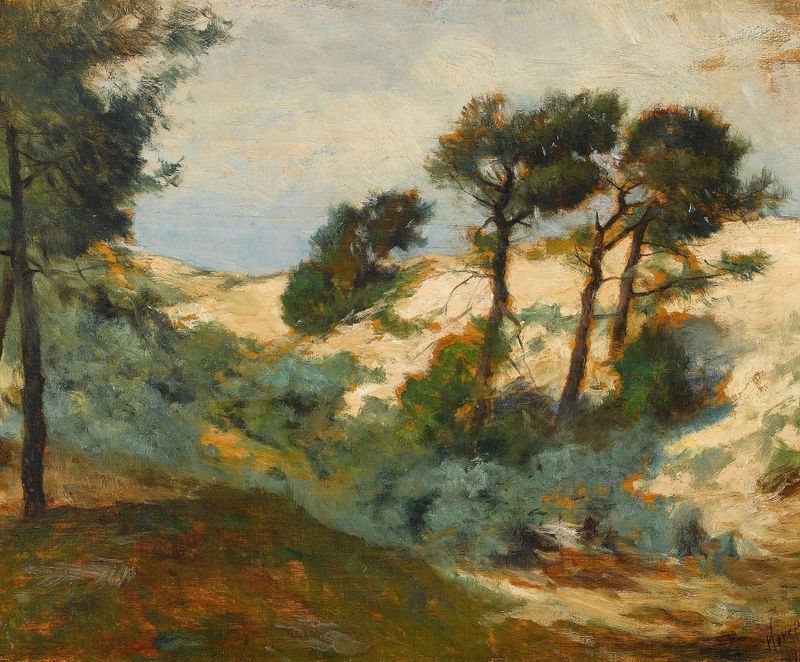
In that waiting, silence becomes an invitation for reflection, a pause where nature breathes and the soul can wander. Look to the foreground, where gentle undulations of grass blend seamlessly with dabs of vibrant green and golden yellow. Your eye is drawn to the way the light dances across the canvas, illuminating patches of wildflowers that seem to whisper secrets of fleeting moments. Notice how the soft brushstrokes create a textured surface, beckoning you closer to the delicate interplay of shadow and light, revealing the tranquility of a sun-drenched afternoon. Beneath the surface lies a profound stillness, a silence that resonates with the viewer's innermost thoughts.
The horizon is barely defined, suggesting an infinite landscape where time stands still. The interplay of colors evokes a sense of nostalgia, reflecting the passage of seasons and the fleeting nature of life itself. This tension between the ephemeral and the eternal invites contemplation, as if the viewer is meant to pause and listen to the whispers of the past. In 1920, William Henry Howe painted Lyme Pastures during a time of significant change in the art world, which was witnessing the rise of modernism.
This period marked a departure from traditional forms, as artists sought fresh perspectives on nature's beauty. Howe, firmly rooted in the Impressionist tradition, captured the essence of the landscape around Lyme, Connecticut, while also reflecting the serenity and quietude that characterized his own life during these years.