Magenta farm, Monmouthshire — History & Facts
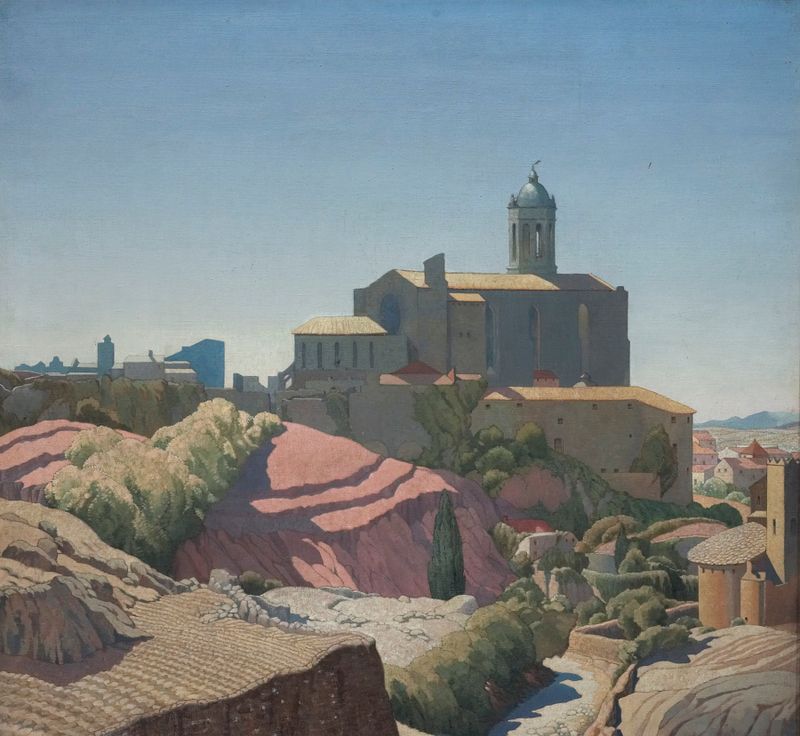
Can beauty exist without sorrow? In the vibrant chaos of Magenta Farm, Monmouthshire, one is drawn into a whirlwind of color and movement that suggests the interplay of joy and longing. Look to the left at the bold strokes of magenta that dominate the landscape, evoking the lushness of the fields. The brushwork here is dynamic, almost frenetic, as if the wind itself is caught in a dance among the grasses. Notice how the light dapples across the canvas, with sunlit patches illuminating the rich greens and purples, creating a sense of depth and vitality that pulses with life.
The contrast of the bright hues against the darker undertones suggests a fleeting moment of beauty caught in an ever-changing environment. Yet, amid this lively spectacle, the darker elements silently speak of underlying tensions. The muted shadows stretch long, reminiscent of time’s passage, hinting at the impermanence of such beauty. Each stroke seems to whisper stories of the land's history, interwoven with the echoes of laughter and the heaviness of loss.
This duality invites the viewer to reflect on their own experiences and how joy and sorrow often coexist in life's ever-turning cycle. Created during a period of exploration in the early 20th century, this work reflects the artist's deep connection to the changing landscapes of Wales. Guy Kortright painted this piece amidst a burgeoning interest in capturing the emotive qualities of nature, a movement that sought to express the immediate and the ephemeral. His work often resonated with the tumult of his time, as the world around him grappled with both the beauty and the chaos of change.