
Mary Magdalene — History & Facts
When did color learn to lie? In a realm where pigments dance with truth and illusion, an artist captures the essence of sorrow in a stunning portrayal. Look to the left, where the figure of Mary Magdalene emerges with haunting clarity. Draped in muted hues of deep red and somber earth tones, her garments echo the weight of her grief. Notice how the light delicately caresses her face, illuminating her features while leaving shadows to linger in the folds of her robes.
The subtle play of chiaroscuro enhances the emotional gravity of the scene, pulling the viewer into her internal struggle. As you examine the painting further, consider the small yet striking details—the tear glistening on her cheek and the delicate, trembling fingers that cradle a vial of ointment. These elements speak of her penance and devotion, hinting at a complex relationship with redemption and the human condition. The stark contrast between her vibrant red attire and the muted background reflects a tension between vitality and despair, underscoring the profound melancholy that permeates the work. Francesco, known as Cecco Bravo Montelatici, painted this work in the 17th century, a time marked by the Baroque movement's exploration of emotion and spirituality.
He was in Rome, navigating a competitive art scene while still finding his voice. The period was defined by a fascination with dramatic expression and the human experience, and Montelatici undoubtedly channeled these currents while creating this poignant representation of Mary Magdalene.
More Artworks by Francesco, called Cecco Bravo Montelatici
Browse all →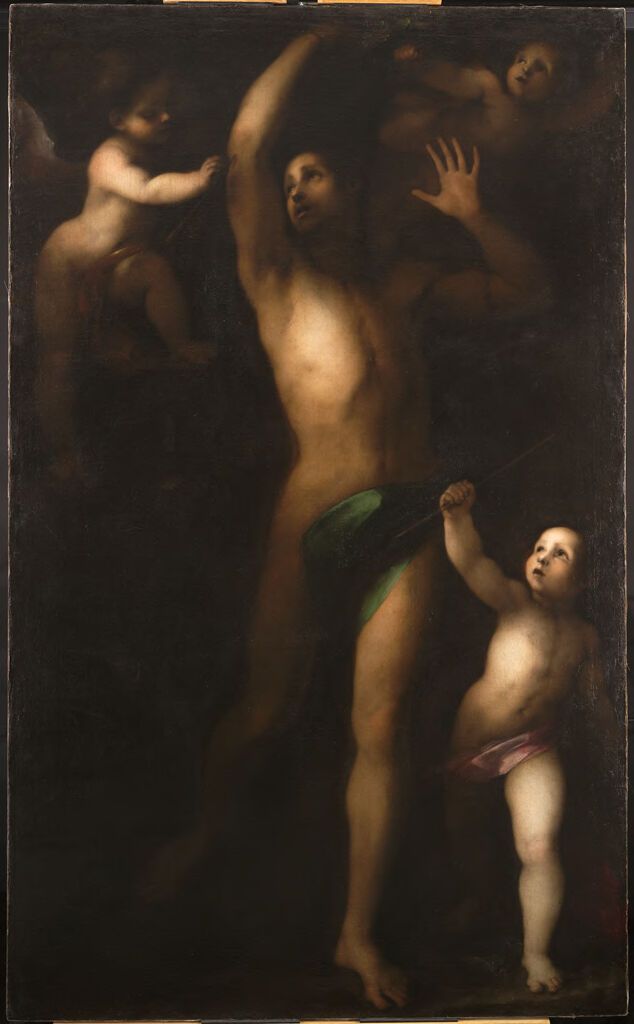
More Religious Art
Browse all →
The Return of the Prodigal Son
Rembrandt van Rijn

The Garden of Earthly Delights
El Bosco

Count Orgaz’ funeral
El Greco

The Hundred Guilder Print: the central piece with Christ preaching, the plate arched
Rembrandt van Rijn

The Descent from the Cross
Rogier van der Weyden

The return of the prodigal son
Rembrandt van Rijn