
Saint Sebastian — History & Facts
In Saint Sebastian, the tension between life and illusion unfolds in vivid detail, inviting us into a world where the ethereal and the corporeal intertwine. Look to the left at the figure of Sebastian, bound and vulnerable yet radiating a profound strength. The light bathes his body in hues of soft flesh against the deep shadows of the surrounding landscape, creating a striking contrast that pulls the eye. Notice how the artist meticulously delineates the arrows piercing his skin, each one a testament to suffering yet rendered with an almost delicate touch, conveying both agony and grace.
The drapery cascades around him, revealing the contours of his muscular form, emphasizing his vulnerability while celebrating the beauty of the human body. The choices of color and composition evoke a sense of tension between the sacred and the profane. The interplay of light and shadow not only heightens the drama of the moment but also symbolizes the struggle between earthly pain and divine hope. Sebastian’s gaze, directed upwards despite his torment, hints at a transcendent faith, suggesting that even in suffering, there exists a profound connection to something greater.
The use of illusionary depth draws the viewer into his plight, making us question the boundaries between reality and the divine. Francesco, known as Cecco Bravo Montelatici, created this work in the 17th century during a time when Baroque art flourished, rich with emotional intensity and religious fervor. Living in Florence, he was influenced by both the rise of naturalism and the dramatic expressions that characterized his contemporaries. This period marked a significant evolution in the portrayal of human experience, merging spirituality with the rawness of physical existence, which is palpably felt in this compelling piece.
More Artworks by Francesco, called Cecco Bravo Montelatici
Browse all →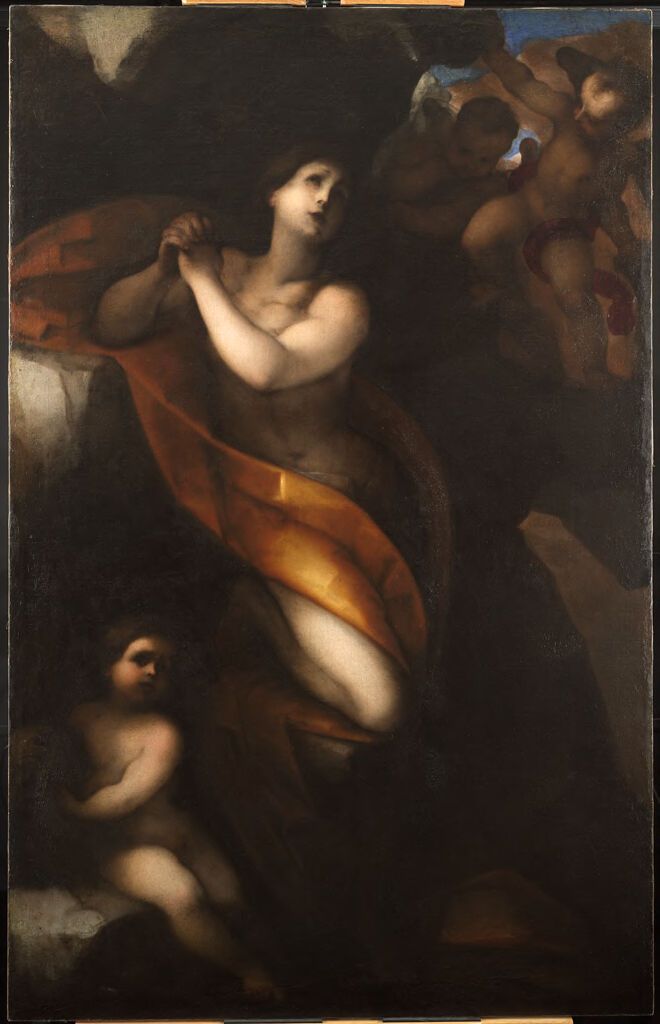
More Religious Art
Browse all →
The Return of the Prodigal Son
Rembrandt van Rijn

The Garden of Earthly Delights
El Bosco

Count Orgaz’ funeral
El Greco

The Hundred Guilder Print: the central piece with Christ preaching, the plate arched
Rembrandt van Rijn

The Descent from the Cross
Rogier van der Weyden

The return of the prodigal son
Rembrandt van Rijn