McKee’s Back Yard — History & Facts
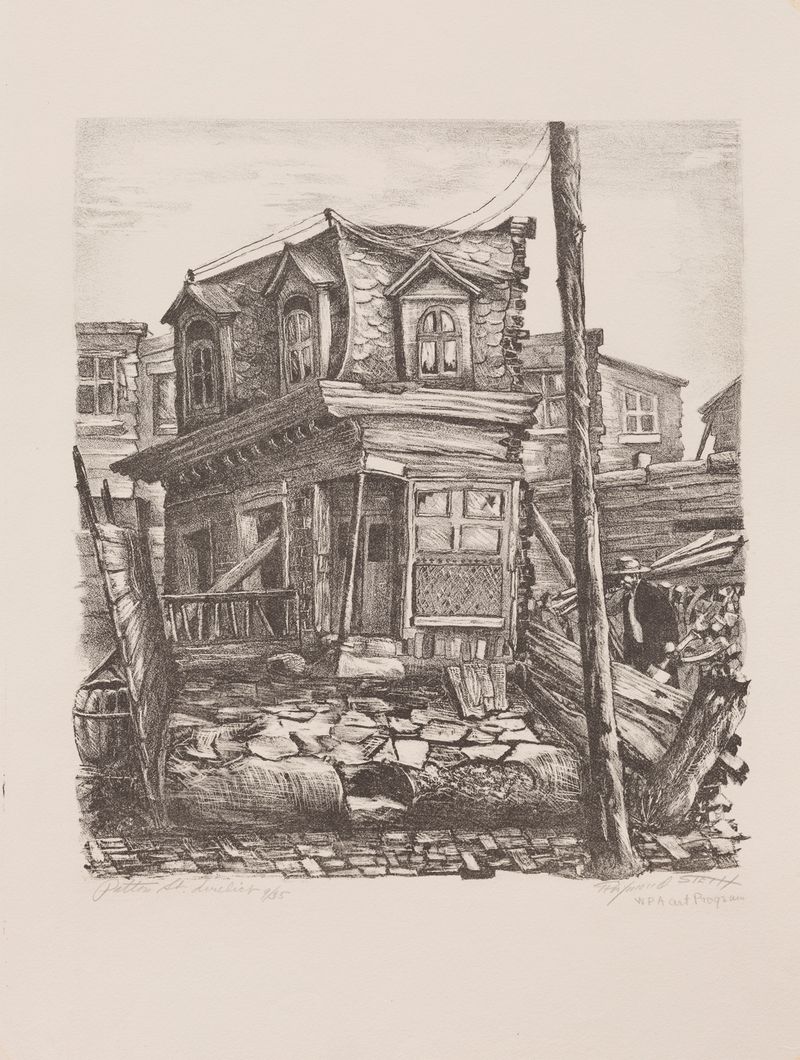
In McKee’s Back Yard, the weight of loneliness settles over the canvas, inviting introspection and a quiet longing that resonates deeply within the viewer's heart. Look to the center of the painting, where a solitary figure stands on the edge of an unkempt lawn, surrounded by the ghost of a garden. The muted greens and browns evoke a sense of decay and neglect, while the soft light filters through branches overhead, casting dappled shadows that dance across the ground. Attention to detail shines in the intricate brushwork that captures the textures of the grass and the weathered fence, creating a palpable atmosphere of stillness and isolation. A closer examination reveals layers of emotional tension—the neglected tools strewn nearby speak of forgotten labor, while the empty space surrounding the figure amplifies their solitude.
The juxtaposition of vibrant, hopeful blooms in the background against the stark emptiness of the foreground suggests a yearning for connection, a desire for life amidst desolation. Each element, from the fallen leaves to the distant trees, builds a narrative of absence and reflection, inviting the viewer to ponder their own experiences of loneliness. During the years from 1938 to 1941, the artist created this poignant piece against the backdrop of a world grappling with the shadows of war. Steth, residing in the United States, was influenced by the themes of psychological depth that permeated the art world—an exploration of the human condition marked by the stark realities and emotions that arose during this tumultuous period.