Mill at Load Water — History & Facts
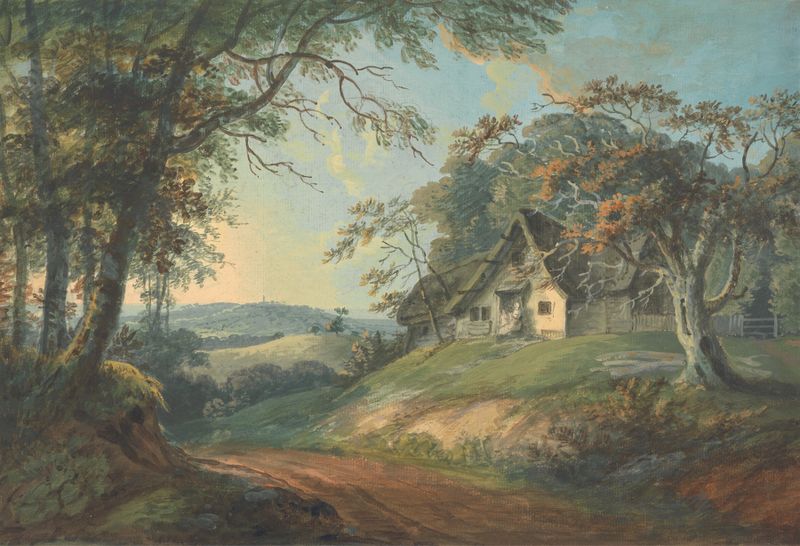
Where does light end, and longing begin? In the delicate balance of nature and toil, one often seeks that thin veil where hope ignites anew. Look to the forefront of the painting, where the mill stands resolute against the backdrop of a gentle river’s flow. Notice how the interplay of soft blues and warm earth tones captures both the solidity of the structure and the ethereal quality of the water. The brushstrokes vary in intensity, guiding your gaze along the water's surface, reflecting the shifting light—a metaphor for rebirth nestled within the landscape’s embrace. Amidst the tranquil scene, a subtle tension pulses.
The mill itself, a symbol of industriousness, juxtaposes the soft, flowing motion of the water, suggesting harmony between human effort and the relentless passage of time. The verdant banks surrounding the river cradle the mill, serving as a reminder of nature’s enduring cycle of renewal. One can almost feel the life teeming just beneath the surface, whispering tales of rebirth to those who pause to listen. Thomas Stowers likely painted this work during a time when industrialization was transforming landscapes across England.
Though the exact date remains unrecorded, his focus on the mill reflects a fascination with the intersection of nature and human enterprise prevalent in 19th-century art. During this period, Stowers sought to capture not just the physical reality around him, but the emotional resonance that such settings could evoke—a longing for connection amidst the evolving world.